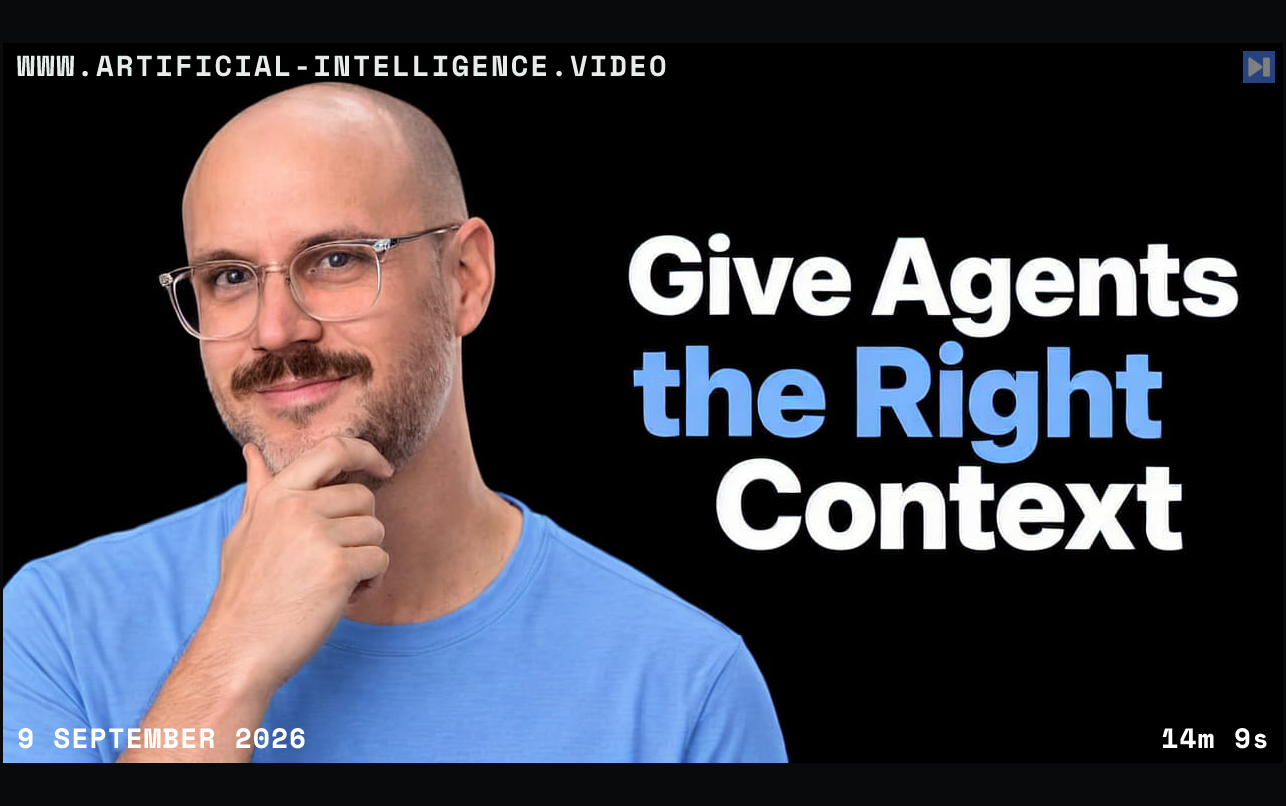
Brandon Waselnuk explains that coding agents begin each session without the organizational knowledge that human teammates accumulate through meetings, reviews, incidents, and day-to-day work. As teams move from autocomplete to parallel and background agents, early context errors compound into wasted tokens, repeated corrections, review overhead, and production risk.
Brandon Waselnuk argues that curated instruction repositories eventually become stale, while giving an agent access to tools does not ensure it will find or reconcile the right evidence. A useful context engineAn AI context engine gathers, reconciles and ranks relevant information so an AI agent can act with the history, decisions and permissions surrounding a task. must unify sources, personalize results to a user's role and work, resolve conflicts between old and recent information, enforce permissions, and return concise task-specific context.
The talk illustrates these ideas with an engineering collaboration graph, a repository-rules index, and relational queries that complement retrieval. Brandon Waselnuk also reports an internal comparison in which adding context reduced a large task from about 21 million to 10.8 million tokens while improving speed and answer quality.
 Watch on YouTube