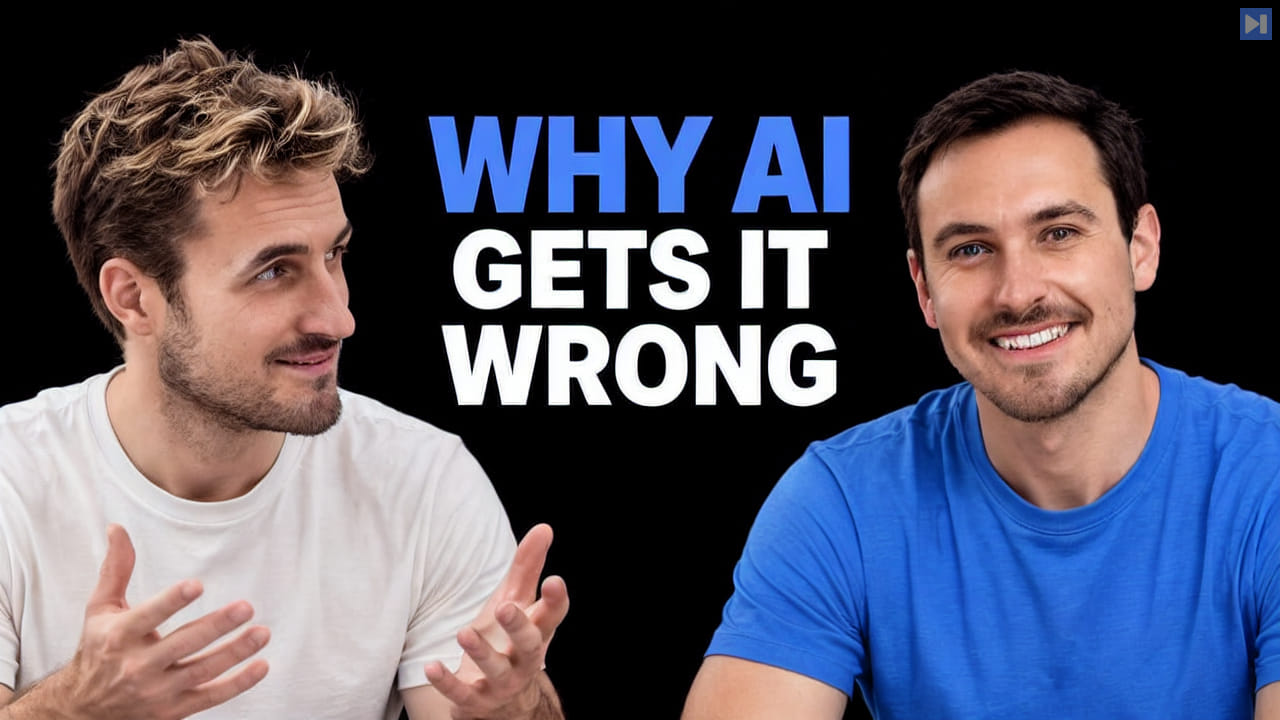
Pierce Freeman and Richard Diehl Martinez use everyday metaphors to describe a prompt moving through a service, GPU scheduling and generated responses. They discuss token streaming and speculative decoding as parts of a simplified explanation, not a verified account of every provider's internal implementation.
Pierce Freeman and Richard Diehl Martinez distinguish a trained model from the surrounding product harness. Data, training environments, tools and interface design can all influence the experience, so comparing applications is not the same as comparing isolated model capabilities.
Pierce Freeman and Richard Diehl Martinez discuss confident mistakes and the incentives that can reward plausible answers over admitting uncertainty. Examples involving fabricated legal citations and deepfake fraud illustrate why fluency and convincing presentation should not replace checking sources or authenticating important requests.
Pierce Freeman and Richard Diehl Martinez consider how access limits and available capabilities can differ between free and paid products. They recommend assessing usefulness on tasks from one's own work and life. Their pricing, parameter-count and capability comparisons are informal examples and opinions, not guarantees that payment eliminates hallucinations.
 Watch on YouTube