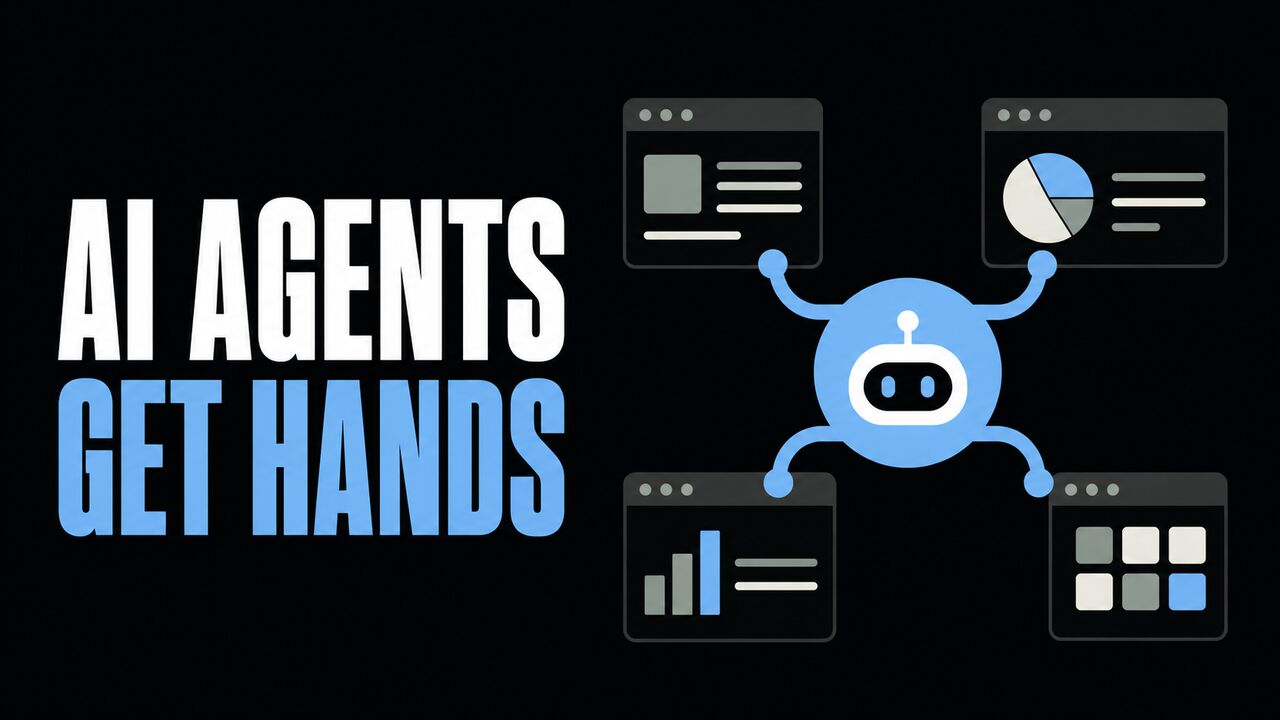
Alex Finn describes Dots as a single front door for tasks spread across ChatGPT conversations, projects and connected toolsA personal AI agent uses a person's authorized goals, preferences, routines, context, and tools to provide continuing individualized assistance.. His comparison with competing agents emphasizes existing ChatGPT memoriesAI agent memory is stored information that an agent can retrieve and use across steps, sessions, or changing contexts. and access to local and cloud workflows, rather than a wholly different set of basic agent functions.
Alex Finn demonstrates Space as an editable, collaborative workspace for documents and interactive artifacts. Calendar planning illustrates how people and their agents might share work, although moving established teams away from existing tools remains an adoption challengeAI adoption is the process by which people and organizations begin using AI systems as a sustained part of real products, decisions, and workflows..
Alex Finn discusses GPT-6.1 Sol through announced benchmarks, explicitly saying he has not tested it. His discussion of a higher-priced subscription and Ultrafast mode separates expensive power-user capabilities from what ordinary users need; the reported performance is his own early experience, not a controlled evaluation.
Alex Finn also covers Codex voice and cloud tasks, app extensions and using ChatGPT subscriptions in other applications. These announcements suggest a broader platform strategy, but his enthusiasm does not establish that every proposed feature will gain lasting adoption.
 Watch on YouTube