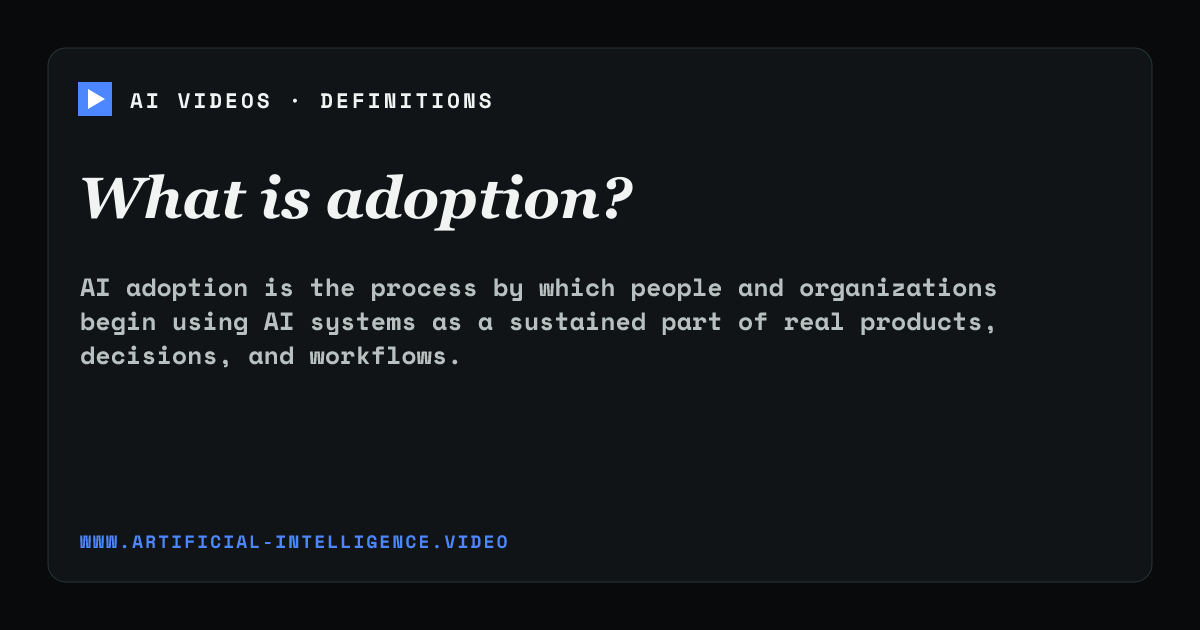
AI adoption goes beyond trying a model or buying access to a tool. It requires a useful workflow, appropriate data, trustworthy behavior, integration with existing systems, training, governance, support, and evidence that the system produces better outcomes than the current alternative.
Adoption can move more slowly than technical capability because habits, switching costs, procurement, regulation, public trust, and product friction change at different speeds. A model may be capable enough before the surrounding product and organization are ready to use it reliably.
ELI5
AI adoption happens when people or organizations move from trying AI to using it as a dependable part of real work, products, or decisions. This requires more than model access: the workflow, data, integration, training, governance, support, and results all have to be useful.
For example, a company has not fully adopted an AI support tool merely because employees tested it for a week. Adoption means the tool fits daily work, handles failures safely, has accountable owners, and produces benefits that justify changing the old process.
Why can AI adoption lag behind model capability?
People and organizations still need usable products, workflow integration, trust, training, governance, and a reason to change familiar behavior.
How is successful AI adoption measured?
Measure sustained use and accepted outcomes, including quality, time, cost, reliability, risk, correction burden, and effects on users.