
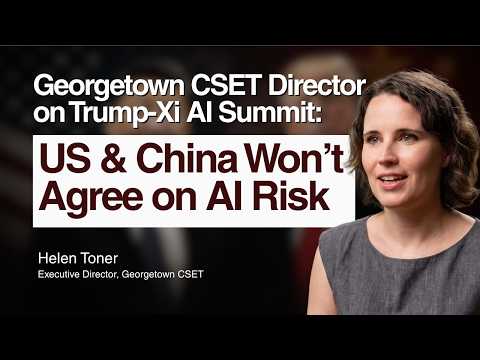
Helen Toner sets low expectations for AI agreements in the US-China summit discussed in this September interview. She argues that even identifying concrete shared problems or the right officials to continue talks would matter. Potential cooperation includes gene-synthesis screening and sharing lessons from AI incidents, but she emphasizes weak trust and different understandings of the risks.
Helen Toner distinguishes competition to lead in AI from a specific race toward recursive self-improvement and a decisive strategic advantage. She describes uncertainty about Chinese government thinking and argues that stability and political control can shape its approach differently from frontier-lab culture. These are her assessments, not a claim that either country has agreed to slow development.
Helen Toner also questions whether declaring a model to be AGI clarifies anything. She recommends naming the capability or tipping point being discussed, such as automated AI research or remote-worker substitution. The closing discussion turns to demand: cheaper production does not by itself show what audiences want, and shared entertainment may retain value even when personalization is easy.
 Watch on YouTube