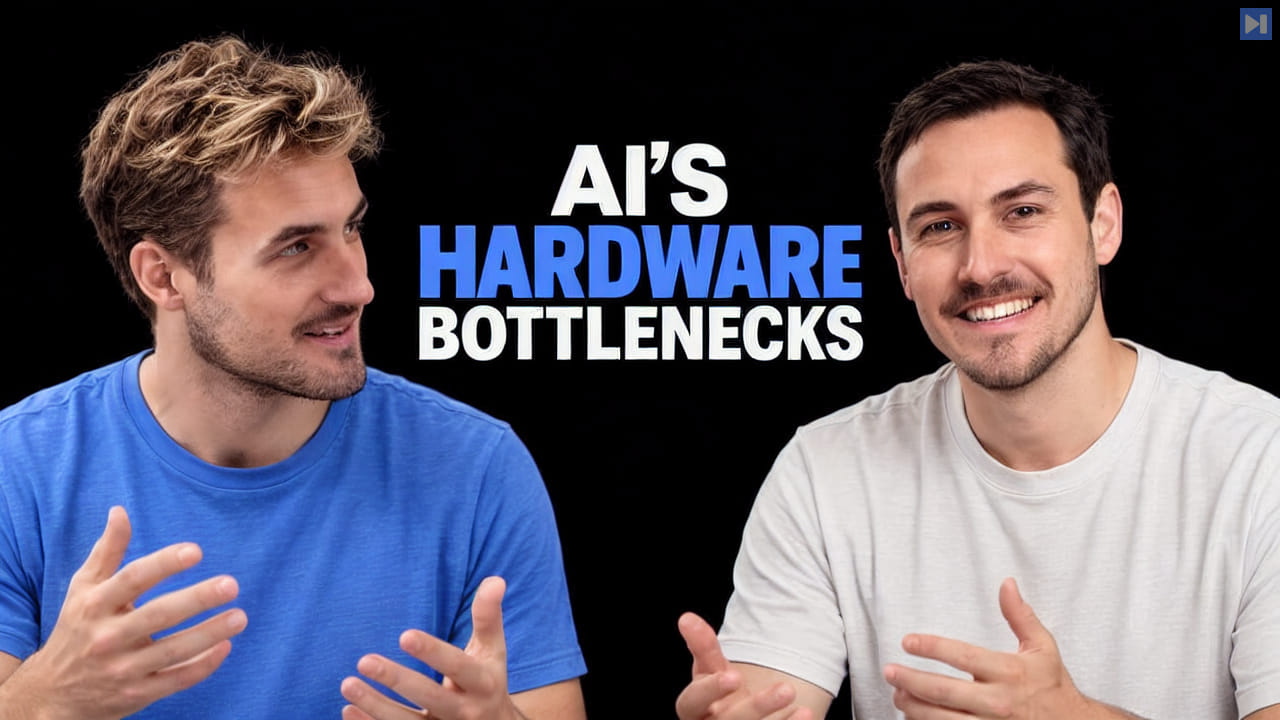
Pierce Freeman and Richard Diehl Martinez discuss reports about DeepSeek and Huawei's Ascend platform, asking how much of Nvidia's advantage comes from its software ecosystem rather than individual chips. Their central distinction is between manufacturing hardware and making existing workloads run efficiently on it. Compatibility, developer tooling and communication between accelerators remain important even when programs can be translated.
The discussion of restricted Mythos access connects scarce capacity, cybersecurity and government influence. The hosts consider reported requests around access rather than establishing a binding government ban. AISI's controlled cyber evaluations demonstrate progress in sustained attacks, but do not establish that every well-defended real network can be compromised.
Memory demand leads to a discussion of high-bandwidth memory and the state needed for long-context inference. The hosts debate whether compression and architectural changes could reduce costs. Their personal hardware-price experiences and forecasts of supplier bargaining power are not a verified market-wide price series, and model context limits should not be confused with permanent conversational memory.
The Manus acquisition dispute prompts a debate about national jurisdiction over AI expertise, corporate location and investment. In the closing section, the hosts offer competing views of global opportunity: paid compute could disadvantage talented developers in lower-income regions, while cheaper prototyping could reduce the capital needed to start a company. These are possible outcomes, not settled predictions.
 Watch on YouTube