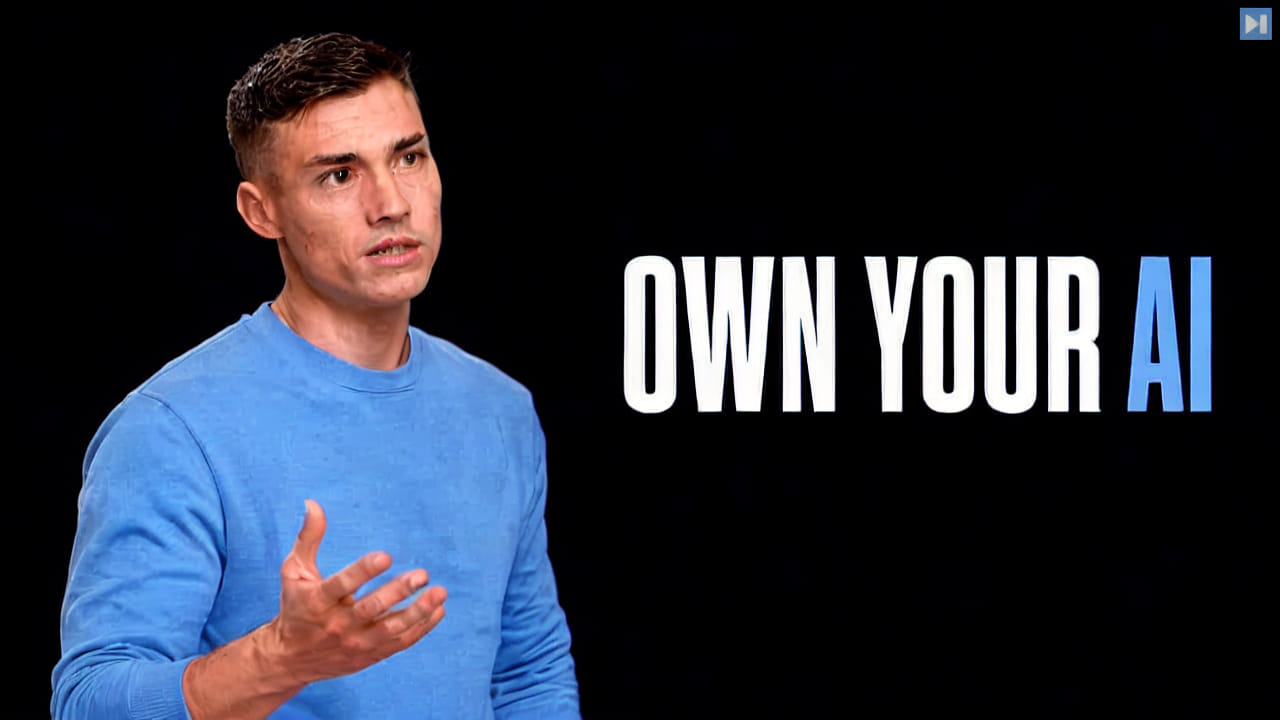
The panel distinguishes trust from safety. Open model weights, code, datasets and training methods can expose more of a system's provenance and operation than an opaque API, but openness does not guarantee safe output. Builders still need evaluations, safeguards and judgment because model behavior remains probabilistic.
Control extends beyond hosting. Organizations can retain interaction traces, understand licensing rights, choose deployment environments and avoid sudden model deprecation or price changes. Those retained traces can later support fine-tuning, reinforcement-learning environments or data selection for a smaller specialized model.
Optimization is framed around outcomes rather than raw token volume. A model trained for one domain and matched to its harness can outperform a broader frontier system on that task while using fewer resources. The panel argues that many workloads do not need frontier-level general intelligence and can benefit from focused post-training, production feedback and community-driven inference improvements.
Open and closed models are presented as complementary layers rather than mutually exclusive choices. Consumer-facing closed services offer convenience, while open models provide a deeper engineering layer for products that require ownership, predictable economics or local execution. The panel expects stronger on-device models, domain-specific knowledge-work agents and more specialized multi-model systems as hardware and open-model capability improve.
 Watch on YouTube