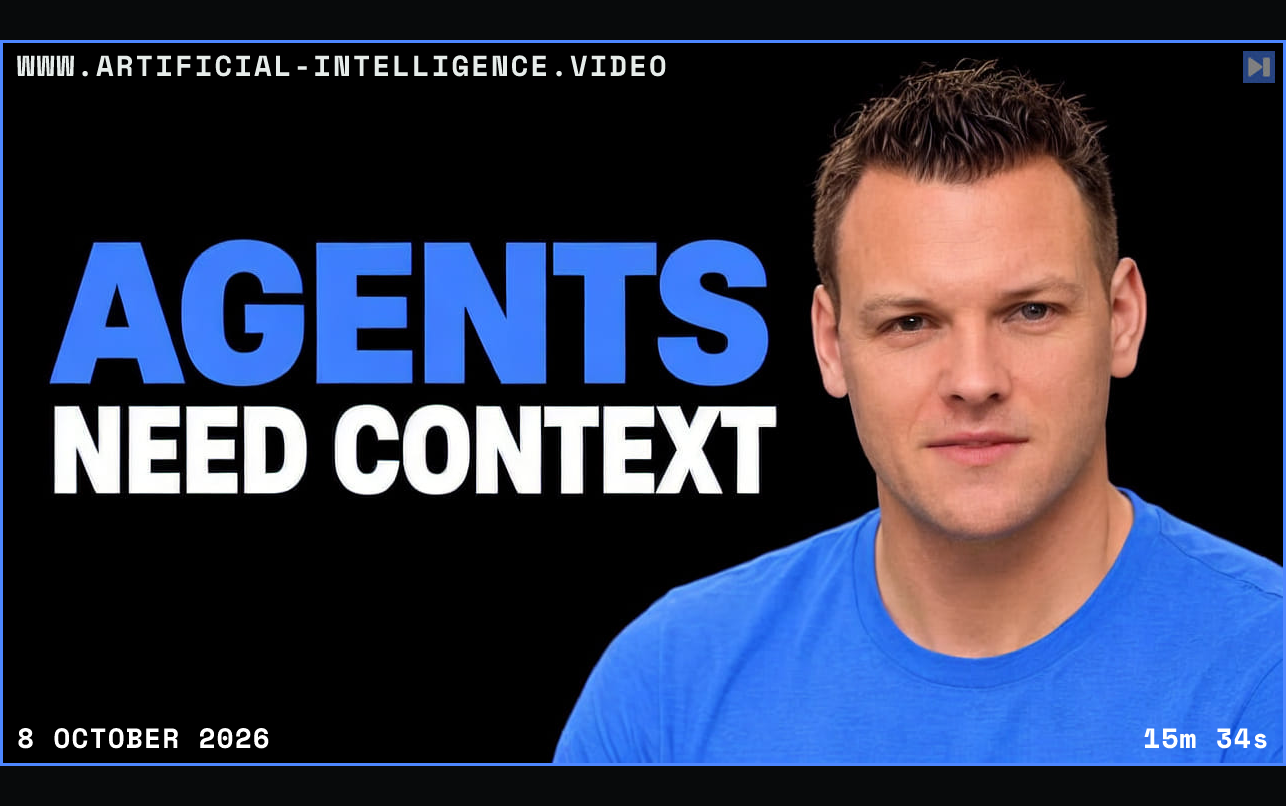
Matt Gibiec contrasts rapid local coding with the operational knowledge needed to change a production system safely. Matt Gibiec argues that a passing local test does not show whether a change fits service dependencies, security boundaries or the business problem. Repeated retries can consume resources without resolving that missing contextContext engineering designs how relevant instructions, evidence, state and tool information are assembled for a model's task..
Matt Gibiec uses illustrative service and incident scenarios to explain how an agent could combine telemetry, historical baselines, deployment changes and repository information. The proposed workflow checks the likely impact before a change, then observes what happened afterwards. These are the presenter's architecture examples and product claims, not independently measured reliability results.
Matt Gibiec recommends establishing the problem and desired outcome before generating code, preserving a human decision at meaningful deployment boundariesHuman judgment in AI is the accountable interpretation and decision-making people contribute when setting goals, evaluating evidence, and managing consequences., and measuring whether the result actually helpsAgent completion verification checks evidence that an agent achieved the requested outcome rather than merely producing intermediate work.. The reusable lesson is a feedback loopAn AI feedback loop occurs when AI outputs or their consequences become inputs that influence later model or agent behavior. from operational evidence to an inspectable proposal and verified outcome, rather than assuming that a confident agent response proves success.
 Watch on YouTube