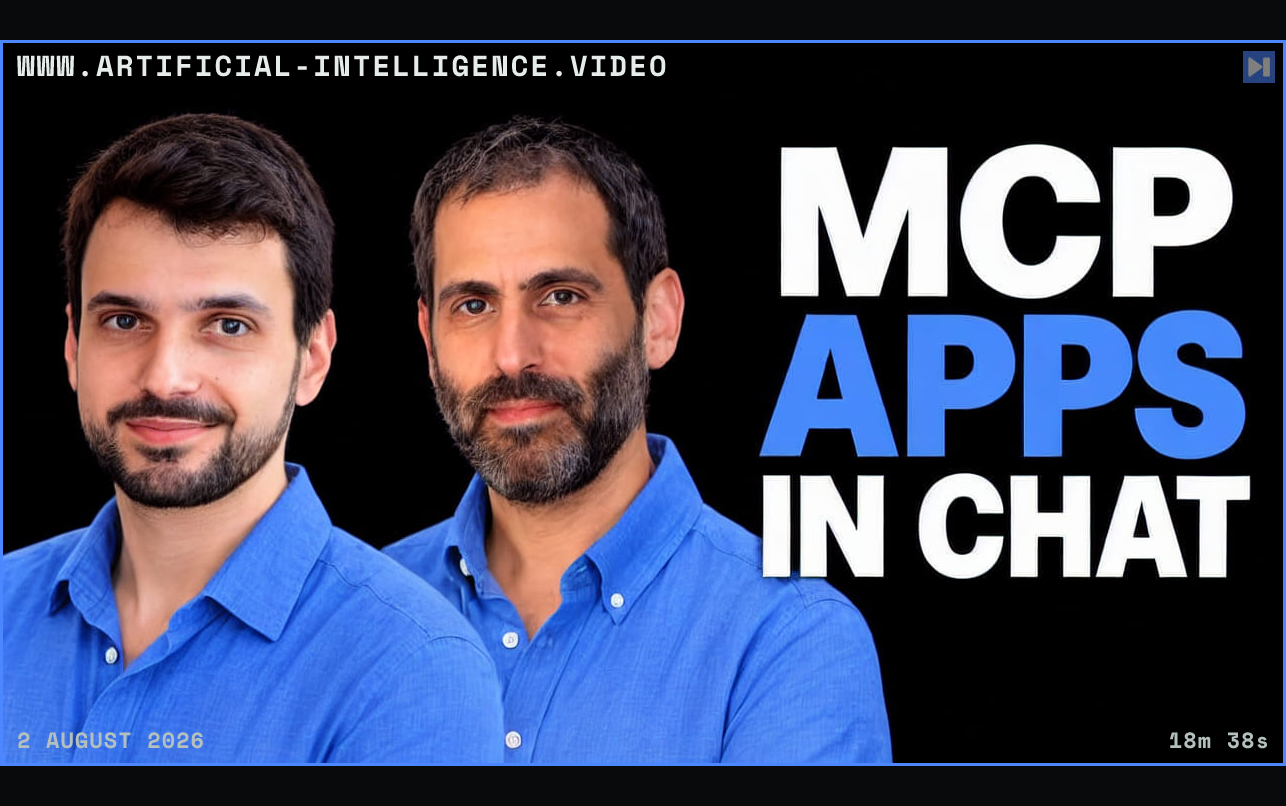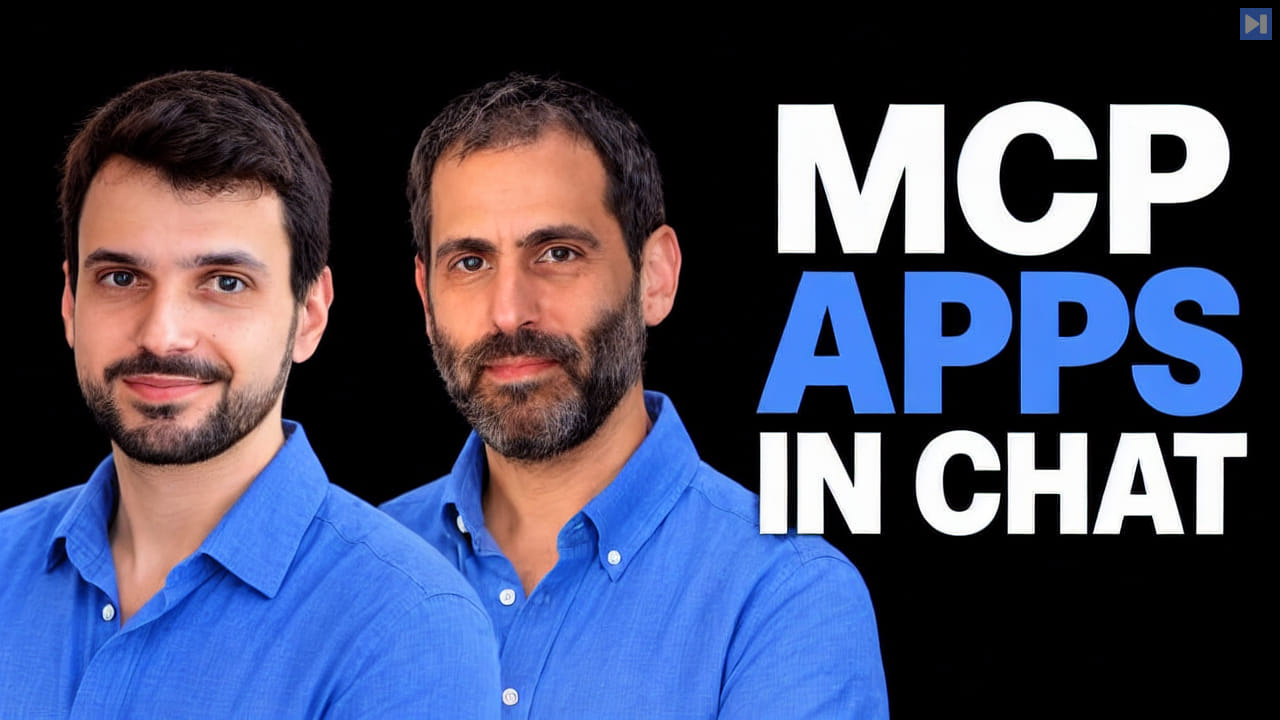
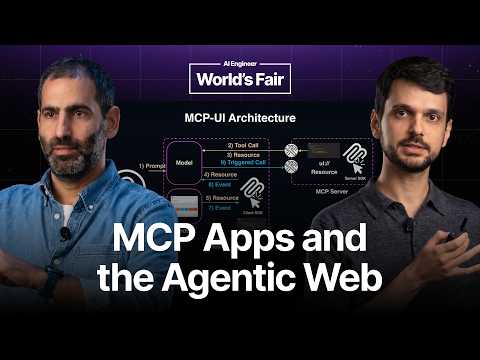
Ido Salomon and Liad Yosef, co-creators of MCP Apps, explain why a text-only MCP response is a poor fit for services with visual and interactive workflows. Their proposal lets a service provide a UI resource that a compatible chat host can render inside the conversation. The presenters describe this as a way for the service to retain a recognizable interface without forcing the user to open a separate website.
The key control boundary is that an embedded app can signal a user action or request a tool call, but the host decides what to do next. A music-list example illustrates a favorite-button click, and a PostHog funnel example contrasts a long textual response with an interactive chart. The presenters then trace the implementation from a tool-linked HTML resource through host rendering in a sandbox and a callback that returns an interaction to the host.
Ido Salomon and Liad Yosef extend that architecture into a vision of an agentic web. Instead of making users navigate many complete sites, an assistant could compose task-specific interface pieces from different services. The talk presents this as a future interaction model, not as evidence that all listed services already support the full workflow.
The roadmap covers reusable views, app-to-host and host-to-app interactions, and interoperability with declarative or generated UI approaches. Some mechanisms are described as proposed or nearing release, so the talk is most reliable as a first-party explanation of the MCP Apps direction and its current examples rather than a guarantee that every planned feature is available today.
 Watch on YouTube