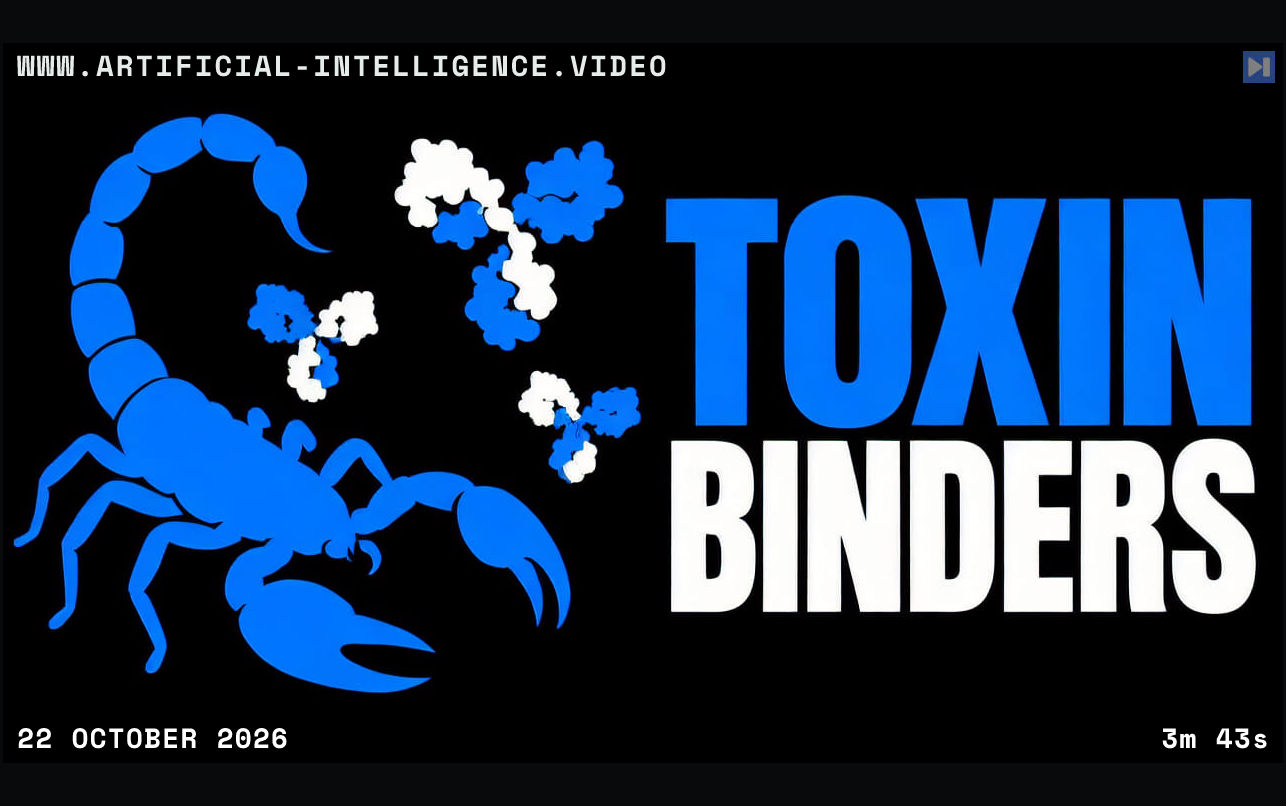
MTS discusses a project by Anthropic and Citrini Research to design small proteinsAI-assisted scientific discovery uses AI to support hypothesis generation, experiment design, analysis, simulation, literature work, and interpretation while researchers retain responsibility. that bind to scorpion neurotoxins. The presenter describes how the team selected the problem and sent proposed designs for laboratory testing.
The video reports that 17 of 211 tested designs met binding criteriaEvaluation is the systematic assessment of a system's behaviour or results against explicit criteria. across four of the five targeted toxins. Binding is an early research result: Anthropic says the candidates have not been shown to neutralize venom in cells and are not an established antivenom.
The account contrasts the speed of computational design with the additional time and cost required for physical laboratory testing.
 Watch on YouTube