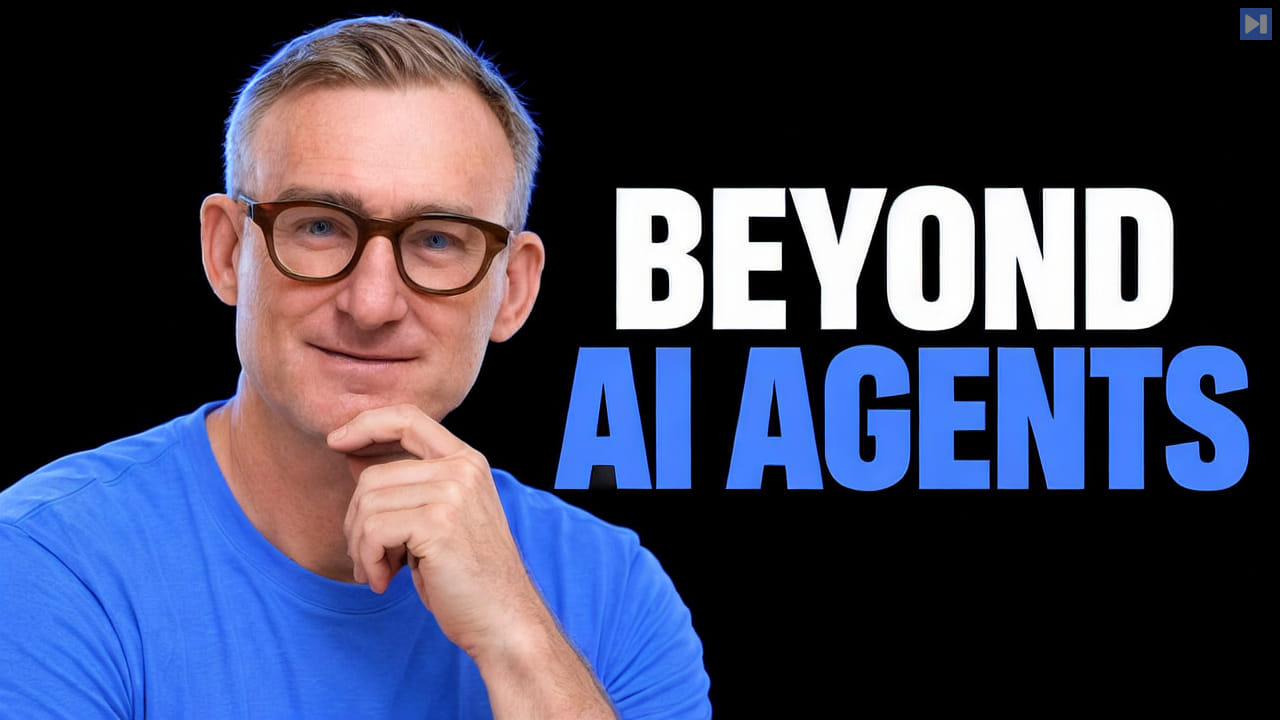
Kwindla Hultman Kramer compares the current AI transition with earlier changes in personal computing, the web, mobile and cloud software. His central argument is that agents matter, but treating them as the complete product model misses the wider set of primitives needed for AI-native applications.
The talk traces how spreadsheets, graphical interfaces and the web turned new computing capabilities into products people could use. Kramer revisits Apple's Knowledge Navigator concept to show that conversational, multimodalA multimodal model can process or generate more than one kind of data, such as text, images and audio. and context-aware interaction has long been imagined, while recent models and infrastructure now make those ideas practical.
A game demonstration called Gradient Bang illustrates the emerging patterns: agents as core interactions, long-running subagentsAgent orchestration coordinates AI agents, tools, people, tasks, state, and control flow so a larger workflow reaches a verified outcome. with shared context, context compressionContext engineering designs how relevant instructions, evidence, state and tool information are assembled for a model's task., progressive skillsAn AI agent skill is a reusable package of instructions, resources, and tool guidance for performing a bounded kind of work., dynamic user interfaces and voice. Kramer concludes that teams should experiment beyond chat wrappers and discover product forms that use intelligence as a native software capability.
 Watch on YouTube