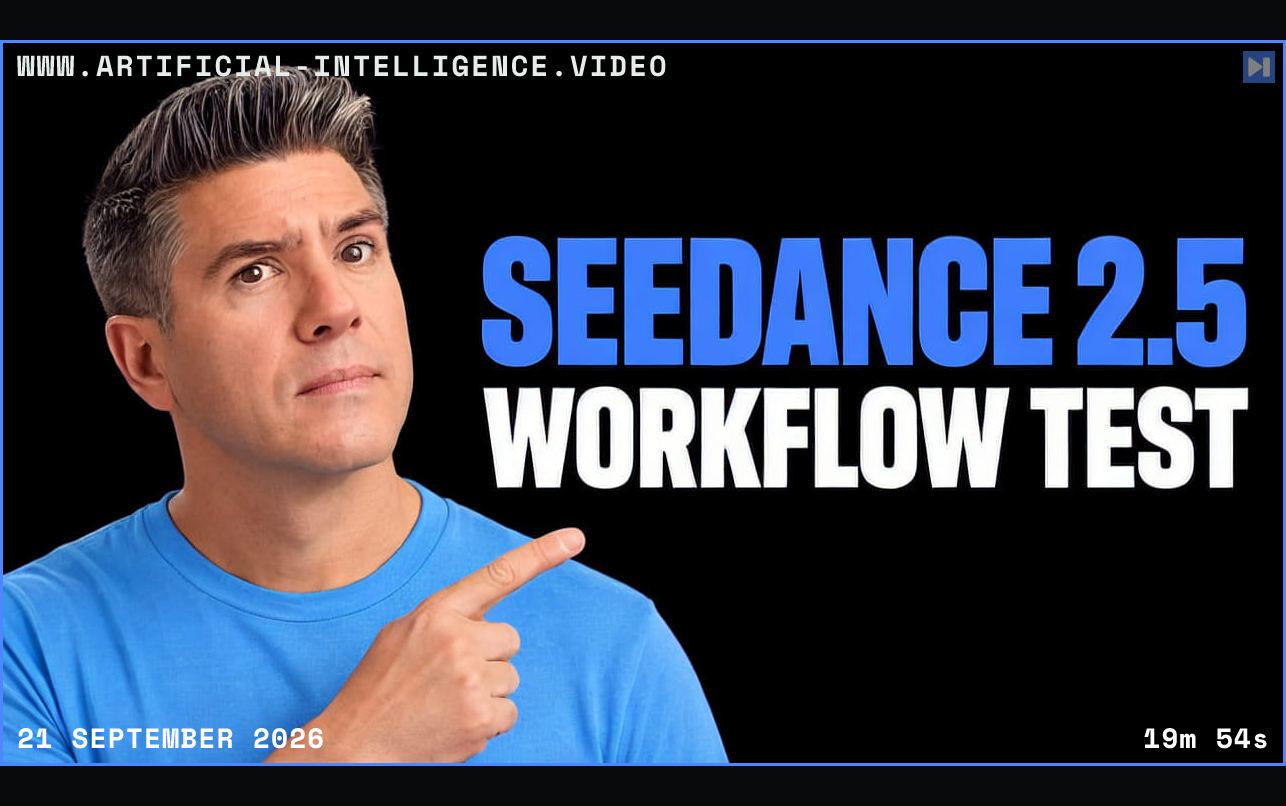
Tim Simmons reviews Dreamina's updated canvas and AI assistant for Seedance 2.5 workflows. The canvas can organise references, plan shots and use multiple image, audio and video modelsA video generation model creates or transforms moving images from text, images, video, audio, or structured controls., but his hands-on testsEvaluation is the systematic assessment of a system's behaviour or results against explicit criteria. reveal uneven generation quality.
A multi-shot action example suffers from a disappearing prop, changing scale and awkward cuts. Supplying a stronger storyboard helps the planning workflow, yet an edit intended to remove glowing eyes instead closes them. Simmons recommends manual control when prompting the final shotHuman judgment in AI is the accountable interpretation and decision-making people contribute when setting goals, evaluating evidence, and managing consequences..
Reusable elements can store character references, additional angles and voices. He also examines a shared filmmaking board as a practical example, while noting that some details are outdated. Preset skills support cinematic takes, storyboards and micro-expressions.
A Seedance 2.5 preview mode generates lower-resolution drafts at reduced cost before a full-quality re-renderCost per completed task measures the total AI, tool, infrastructure, retry, and repair expense for each verified useful outcome.. Simmons distinguishes re-rendering from upscaling and treats its wider release timing as uncertain. BytePlus's Dramagic remains a beta access request, while a possible world-model release is explicitly a rumour.
 Watch on YouTube