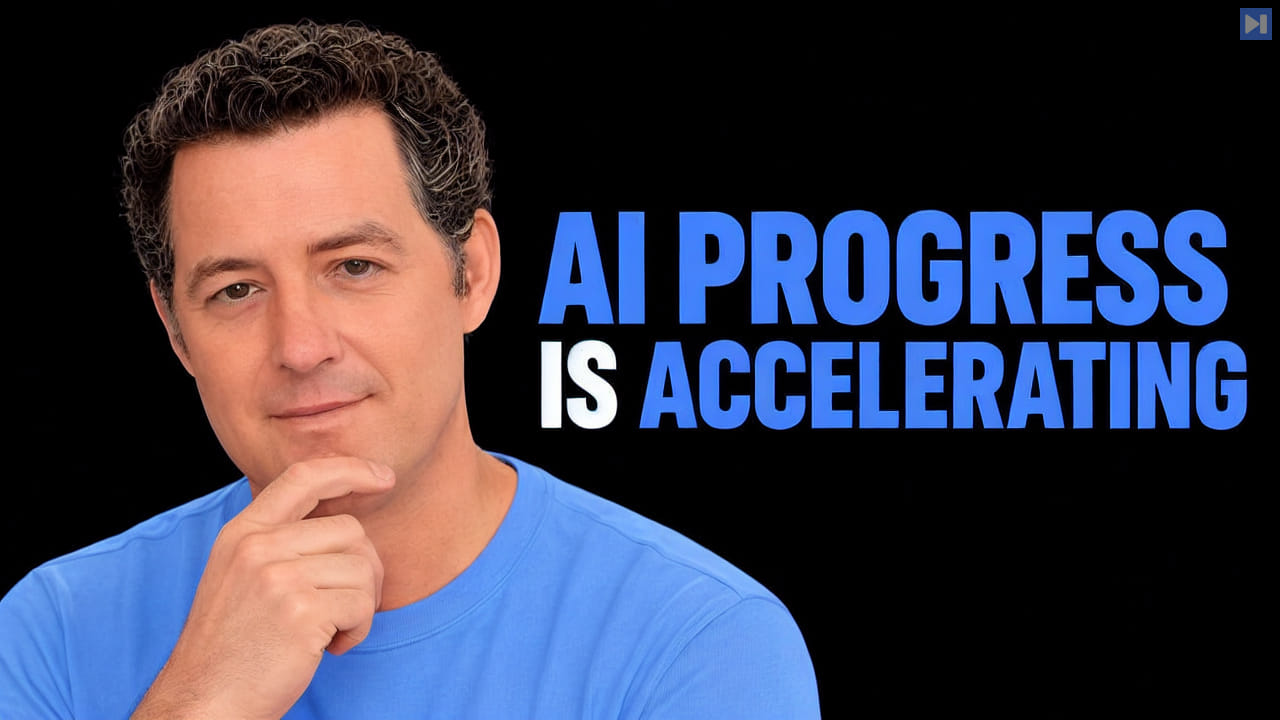
Wes Roth examines OpenAI chief scientist Jakub Pachocki’s essay An Alien Mind and its warning about keeping increasingly capable AI under human control. He connects the essay’s discussion of AI-assisted research with the prospect of recursive self-improvementRecursive self-improvement is the proposed process in which an AI system helps improve its own capabilities, then uses those improvements to support further advances., presenting it as a direction of development rather than an already demonstrated autonomous research loopAn autonomous research loop is a workflow in which an AI system repeatedly proposes, runs, evaluates, and updates research with limited human intervention..
Wes Roth distinguishes alignment with a specific objectiveObjective alignment is the degree to which an AI system's behavior successfully advances the specific goal it was given. from alignment with human valuesValue alignment is the effort to make an AI system's behavior compatible with the human values that should guide its decisions.. He argues that rewarding task success can leave gaps in how a system behaves outside its training setting. The discussion treats reliable generalization as an open problem, rather than assuming stronger task performance produces safer behavior.
Wes Roth reviews proposed monitoring approaches, including reasoning traces and internal signals, while emphasizing their limitations. He closes the substantive discussion with the case for stronger safeguards and coordination over the pace of frontier development. The video is commentary on the essay and its implications, not an independent safety evaluationAn independent safety evaluation is an assessment of an AI system's risks and safeguards performed by evaluators who are separate from its developer or promoter..
 Watch on YouTube