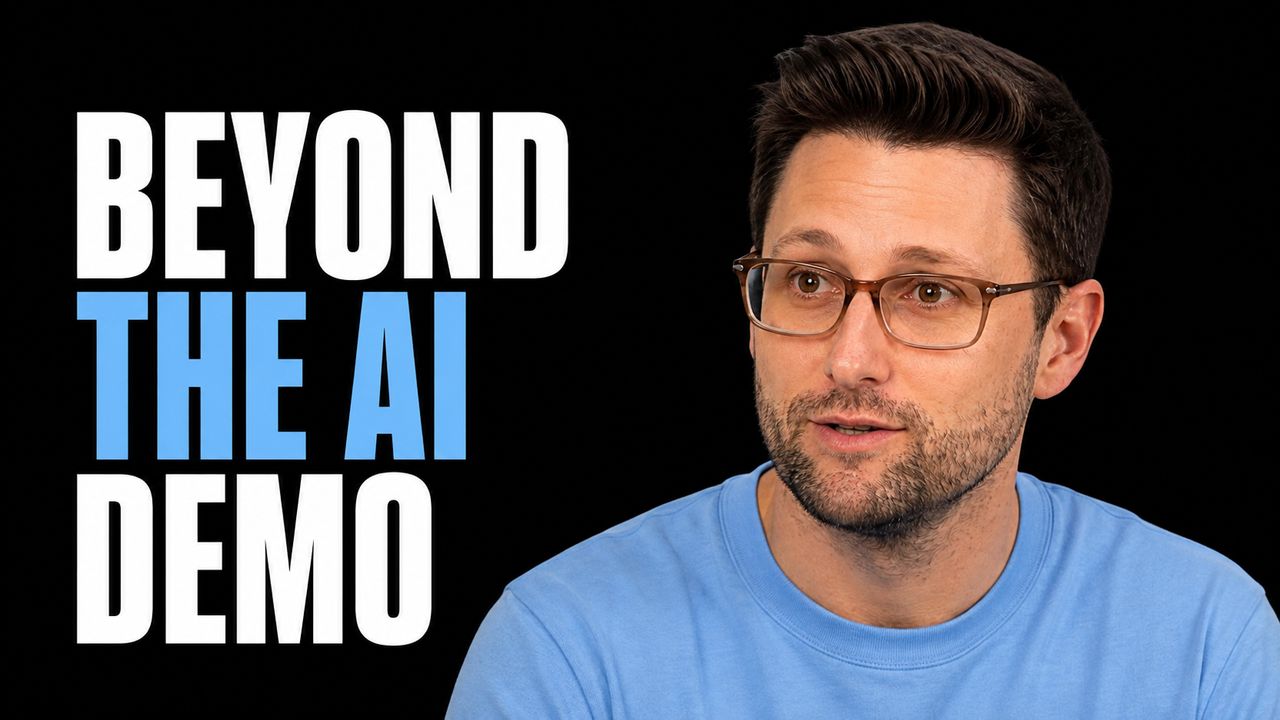
Brian Lewis, an AI product lead at Millennium speaking in a personal capacity, describes the gap between an impressive AI demo and an enterprise contract. His evaluation funnel narrows many potential vendors into a few demos and very few signed deals. Useful products must solve a defined problem, integrate from the start and meet success criteriaEvaluation is the systematic assessment of a system's behaviour or results against explicit criteria. set by the buyer.
Lewis highlights practical requirements across security, reliability and legal review: controlled data retentionData privacy governs how personal, confidential, or sensitive information is collected, used, shared, retained, and protected in AI systems., configurable access, working admin APIs, audit logs, deployment management and reachable support. He describes pilot failures involving broad default permissionsAn agent permission boundary defines and enforces which resources and actions an automated agent is allowed to use., undocumented changes and data practices that contradicted vendor promises.
The buyer also has work to do. Lewis argues that clean architecture, centralized knowledgeContext engineering designs how relevant instructions, evidence, state and tool information are assembled for a model's task., integrations and change management are essential foundations for AI adoption. Agents inherit existing access problems and can amplify them, so stronger models cannot compensate for weak entitlements or unreliable enterprise systems.
 Watch on YouTube