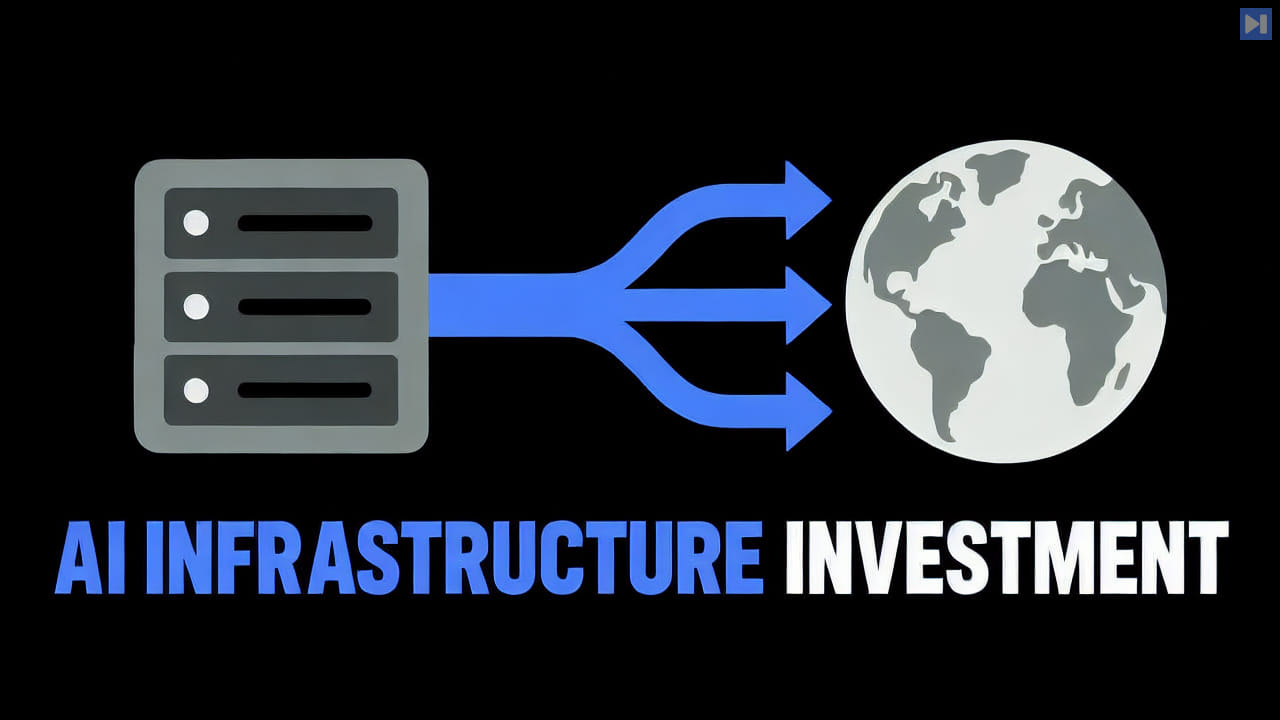
Jen Kha explains that the AI industry's center of gravity is moving below the model layer. As software capabilities advance quickly, performance and economics increasingly depend on chips, memory, interconnects, power deliveryPower delivery is the electrical infrastructure that supplies stable, usable energy to AI computing hardware and its supporting systems. and the industrial systems that support large-scale computationAI compute infrastructure is the hardware, facilities, networks, power, cooling, storage, and software used to train and run AI models..
She describes why the hardware opportunity extends beyond acceleratorsAn AI accelerator is specialized computing hardware designed to perform the matrix and tensor operations used by AI training or inference efficiently.. Data movement, energy use, cooling and manufacturing capacity can each become bottlenecksAn AI infrastructure bottleneck is a constrained component that limits how quickly or efficiently AI compute capacity can expand., creating room for specialized companies that improve one part of the physical stack or redesign how the pieces work together.
Jen Kha frames the shift as a long-term investment thesis rather than a claim that software no longer matters. Better models increase demand for infrastructure, so progress in software and hardware becomes mutually reinforcingAn AI compute flywheel is a reinforcing cycle in which compute improves models, stronger models create value and that value finances more compute. while capital intensity and execution risk remain significant.
 Watch on YouTube