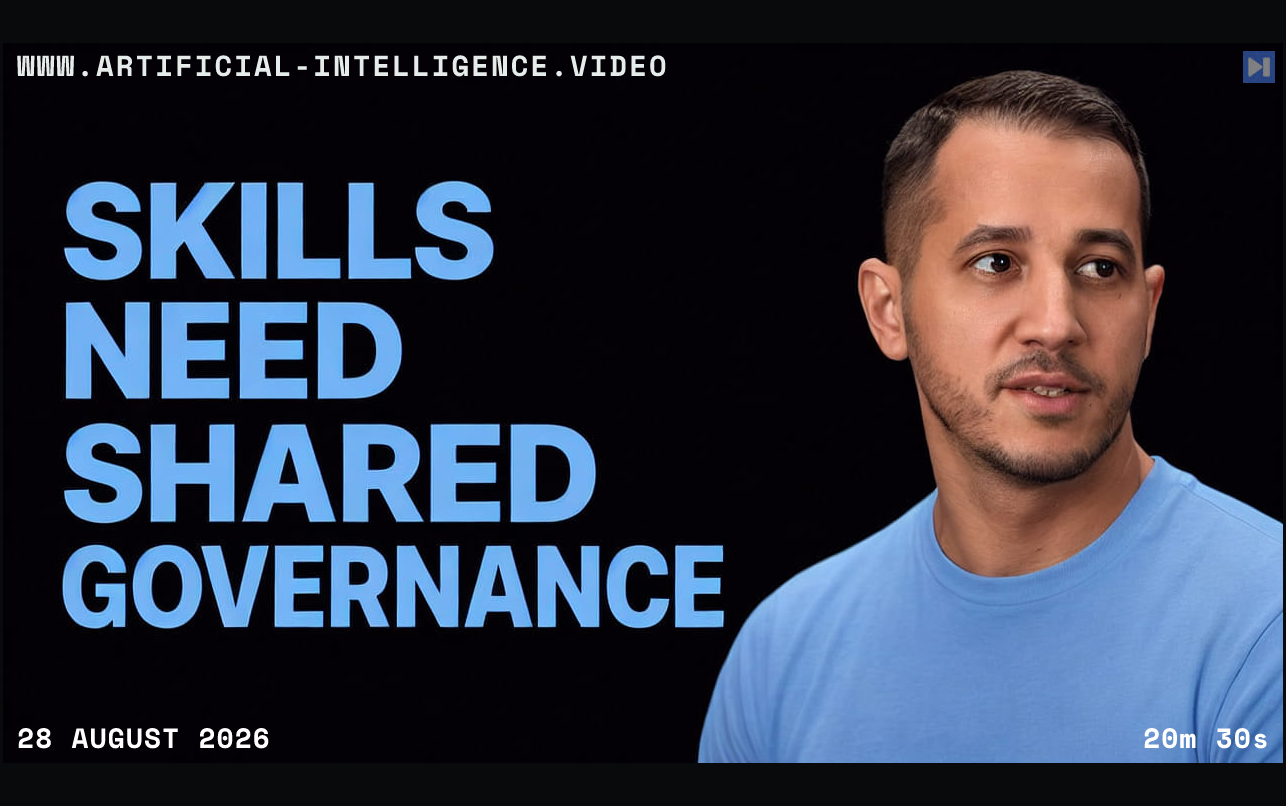
Imad Touil places skillsAn AI agent skill is a reusable package of instructions, resources, and tool guidance for performing a bounded kind of work. inside a broader agentic software stack that includes model and MCP gateways, sandboxes, knowledge graphs, context layers and reusable workflows. Skills carry much of an organization's executable know-how because they tell agents how to perform specialized tasks consistently while loading only the context requiredContext engineering designs how relevant instructions, evidence, state and tool information are assembled for a model's task. at that moment.
The need extends beyond coding a single feature. Enterprise delivery spans product strategy, research, discovery, data preparation, implementation, infrastructure, launch and operations, often across multiple technology stacks. Touil argues that reusable skills and workflow blueprints are how organizations encode those different practices without forcing every team to reconstruct them from prompts.
Good skills should be modular, portable, composable, specialized, discoverable and cost-efficient. Without governance, organizations accumulate duplicated skills, unclear ownership, declining quality, security risks, conflicting behavior and sensitive business logic exposed to the wrong users. Public skills can also contain scripts or prompt-injectionPrompt injection occurs when untrusted content attempts to redirect an AI system's behaviour beyond the authority of that content. risks, so adoption needs evaluation and access controlAn agent permission boundary defines and enforces which resources and actions an automated agent is allowed to use..
Touil recommends a progression from individual creation and testing, to team collaboration, to a central registry with metadata, search, versioning, dependencies, permissions, observability and evaluation. Domain leaders then govern the relevant skill families. The same discipline should eventually cover whole workflows, allowing improvements to flow back into a shared platform while preserving organizational guardrails.
 Watch on YouTube