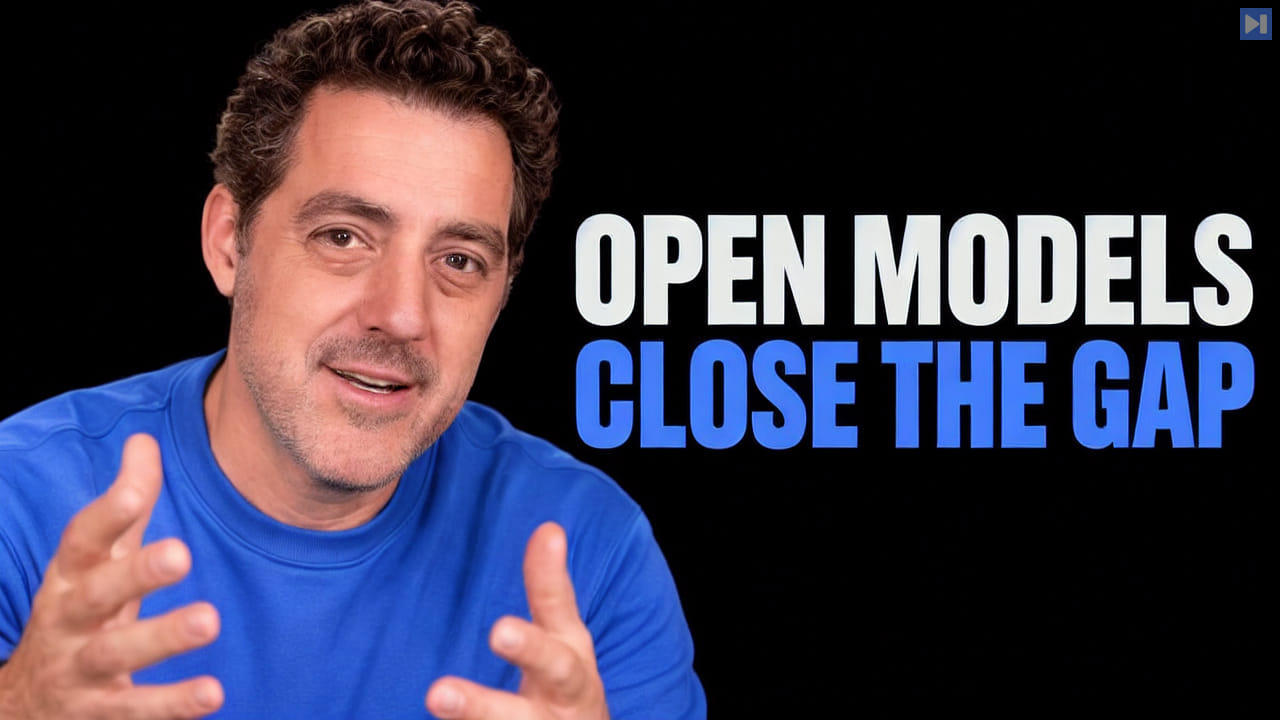
Nate B Jones starts with Mitchell Hashimoto's model tests, where inexpensive systems matched a frontier model on ordinary implementation work. He treats that result as evidence that well-known execution tasks are rapidly becoming commodities.
A harder systems optimization task produced a different outcome because an expert first recognized that a new result might be possible. Jones calls this technical imagination: combining current model capability with domain context to ask questions that do not yet exist on a standard backlog.
His recommended strategy has two layers. Route repeatable execution to cheaper models, while reserving frontier systems for high-leverage scouting, prototyping and unfamiliar problems. Organizations also need verification infrastructure and permission for context-rich employees to make those bets. Promotional material is omitted.
 Watch on YouTube