Osmani describes a shift from interactive coding assistants toward longer-running agent loops and software factories. These systems can investigate, implement, test and report across larger tasks, but their speed and scale create more output than a person can safely review with a quick final glance.
The resulting bottleneck is verification rather than generation. Engineers need evidence such as diffs, tests, logs, traces and explanations, then must decide whether that evidence is sufficient. Clean, maintainable code also matters because both people and models spend less effort understanding systems with clear boundaries and fewer unnecessary abstractions.
The talk warns against cognitive surrender: accepting an AI answer before forming an independent view. Delegation is different because the human still judges the result. Running more agents also creates a coordination tax, so attention, review gates and escalation paths need to be designed as deliberately as the implementation loop.
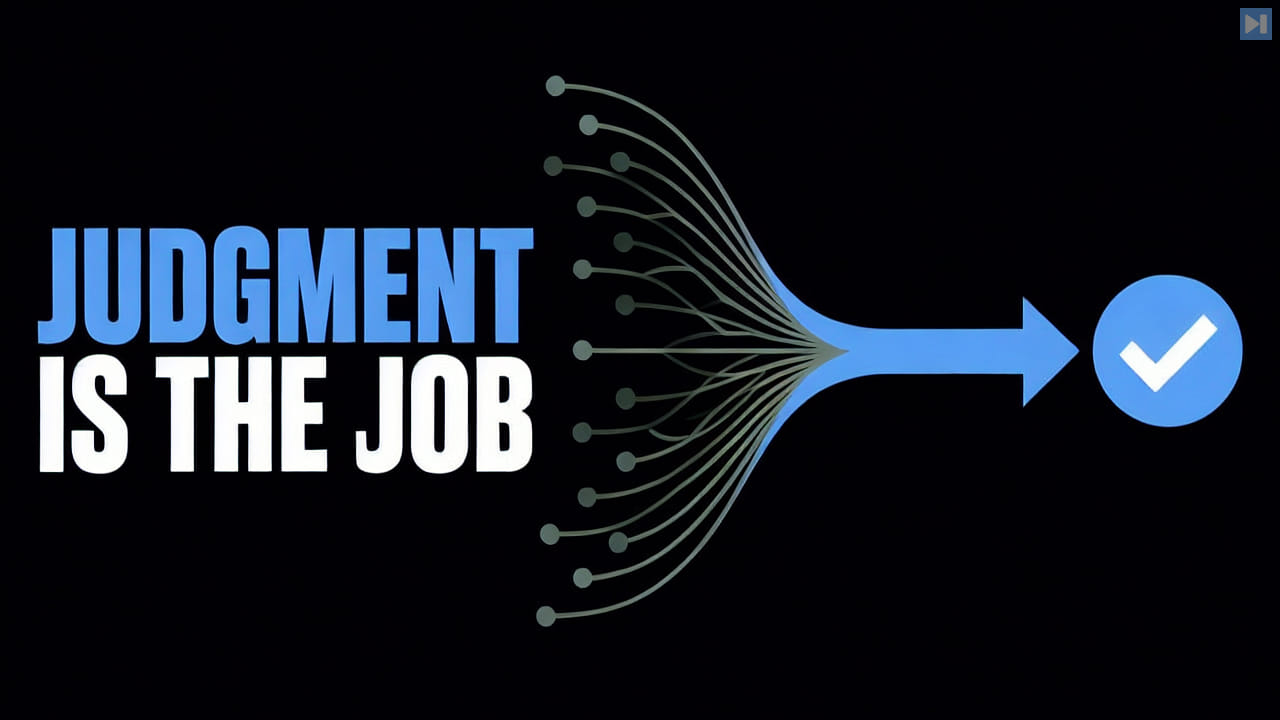
Osmani's central career argument is that model capabilities will change quickly, while accountability and trusted ownership have a longer half-life. Agents can execute within policy, but people and organizations still accept risk and consequences. The engineer of the future therefore distinguishes which paths deserve attention, can explain the resulting work and remains responsible for shipping it.
 Watch on YouTube