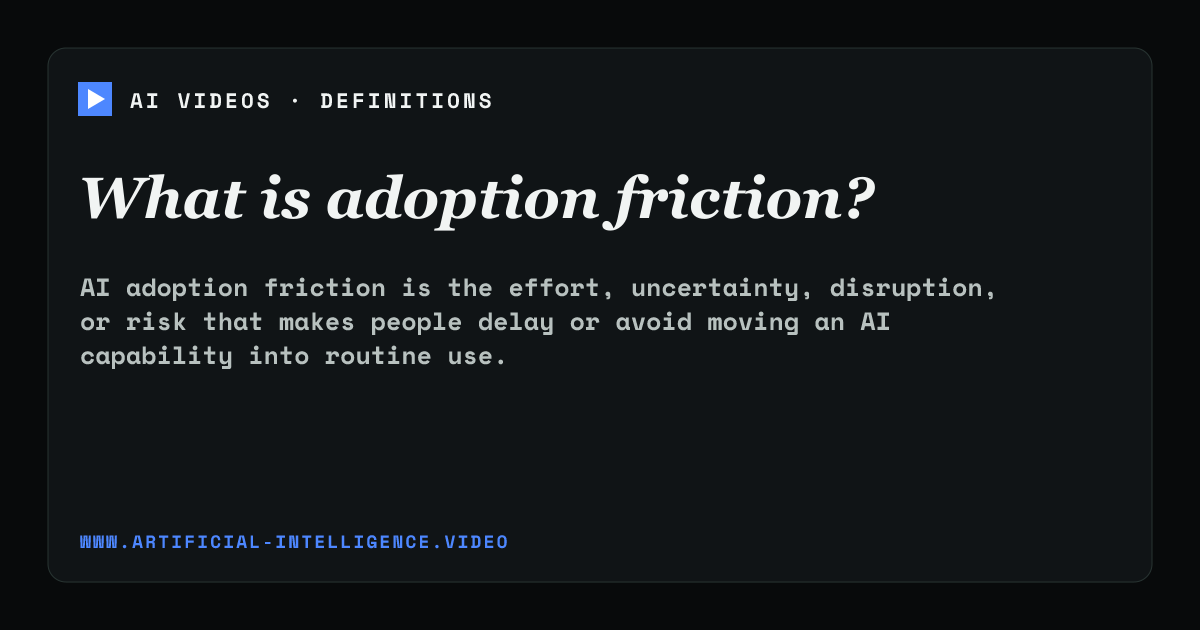
AI adoption friction can come from unfamiliar interfaces, fragmented tools, setup, training, data migration, security review, weak integration, unreliable output, or a workflow that requires more correction than expected. Even a capable model can lose to a familiar product when the cost of changing behavior feels larger than the immediate benefit.
Teams reduce friction by starting with a clear task, integrating with existing work, preserving user control, providing observable evidence, and making recovery easy. Adoption should not be forced by hiding risks or removing necessary review, because short-term usage without trust rarely becomes durable value.
ELI5
Adoption friction is anything that makes people hesitate to start or continue using an AI tool. It can come from difficult setup, confusing controls, weak integration, unreliable results, or the effort needed to check every output.
For example, a capable writing assistant may be ignored if employees must copy every document into a separate system and repair its formatting afterward. Connecting it to the existing workflow and making mistakes easy to undo can reduce that friction.
What causes AI adoption friction?
Common causes include unfamiliar workflows, setup effort, poor integration, unreliable results, security concerns, training needs, and difficult switching.
How can an AI product reduce adoption friction?
Fit the existing workflow, minimize unnecessary steps, make changes visible, preserve user control, and prove value on a bounded task.