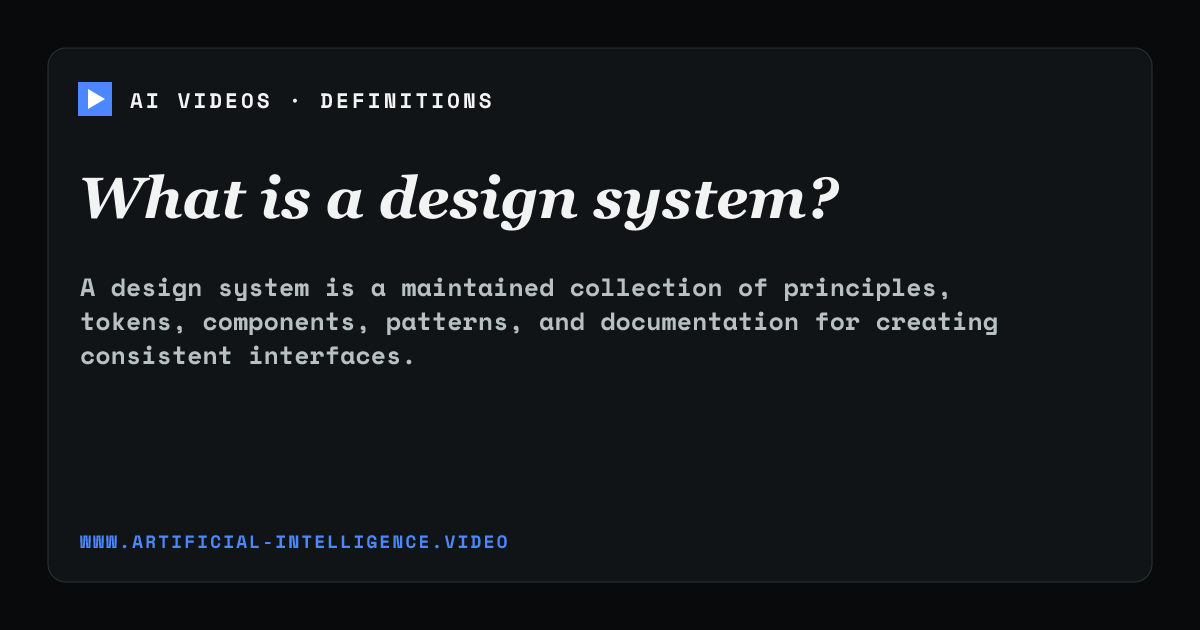
A design system defines reusable decisions about visual hierarchy, color, typography, spacing, components, motion, and interaction. It gives designers, developers, and AI systems a shared vocabulary for producing related interfaces.
The system is more than a style guide because it connects rules with reusable implementation. Effective systems are versioned, accessible, responsive, documented, and governed so generated output can remain consistent across a long page or product.
ELI5
A design system is a shared kit for making product interfaces feel like parts of the same whole. It contains reusable pieces and rules for how those pieces should look and behave.
For example, it can define one button family with approved colors, spacing, hover, focus, loading, and disabled states. An AI agent can reuse that component instead of inventing a slightly different button on every screen.
How does a design system improve AI-generated interfaces?
It replaces vague aesthetic requests with reusable constraints and components that guide hierarchy, spacing, typography, color, motion, and responsiveness.
What is included in a design system?
It commonly includes design principles, tokens, components, interaction patterns, accessibility guidance, code, examples, and contribution rules.