Embodied systems connect sensing, reasoning and action in a robot or simulated agent. They must interpret the current environment, choose a movement and then adapt to the physical or simulated result.
World models and synthetic data can provide additional practice before real-world deployment. Physical systems still require direct testing because contact, friction, sensor noise and safety constraints can differ from the generated environment.
ELI5
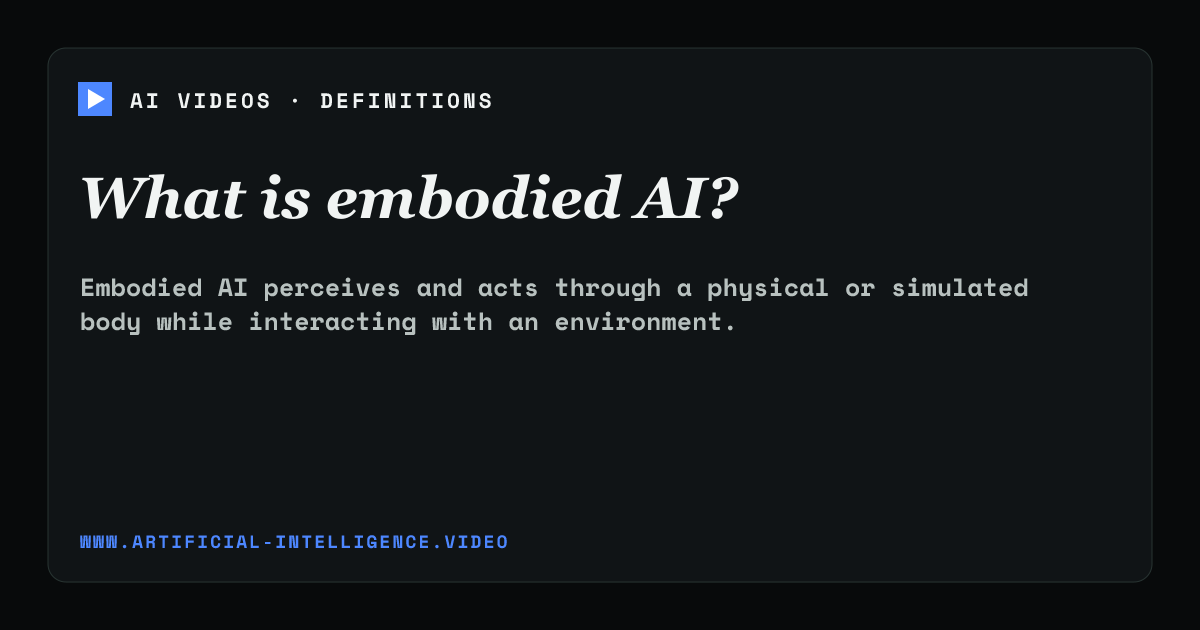
Embodied AI perceives and acts through a body in a physical or simulated environment. A robot combines sensors, reasoning and movement, then observes what happened after each action.
For example, a warehouse robot can see a box, plan a grasp and adjust when the box shifts. Because mistakes can damage objects or hurt people, the system needs force limits, secure control software, testing and reliable emergency stopping.
Does embodied AI always require a physical robot?
No. It can also operate through a simulated body, although physical deployment introduces additional sensing, control and safety challenges.
Why are world models useful for embodied AI?
They can simulate how actions change an environment and provide practice data before costly or risky physical trials.