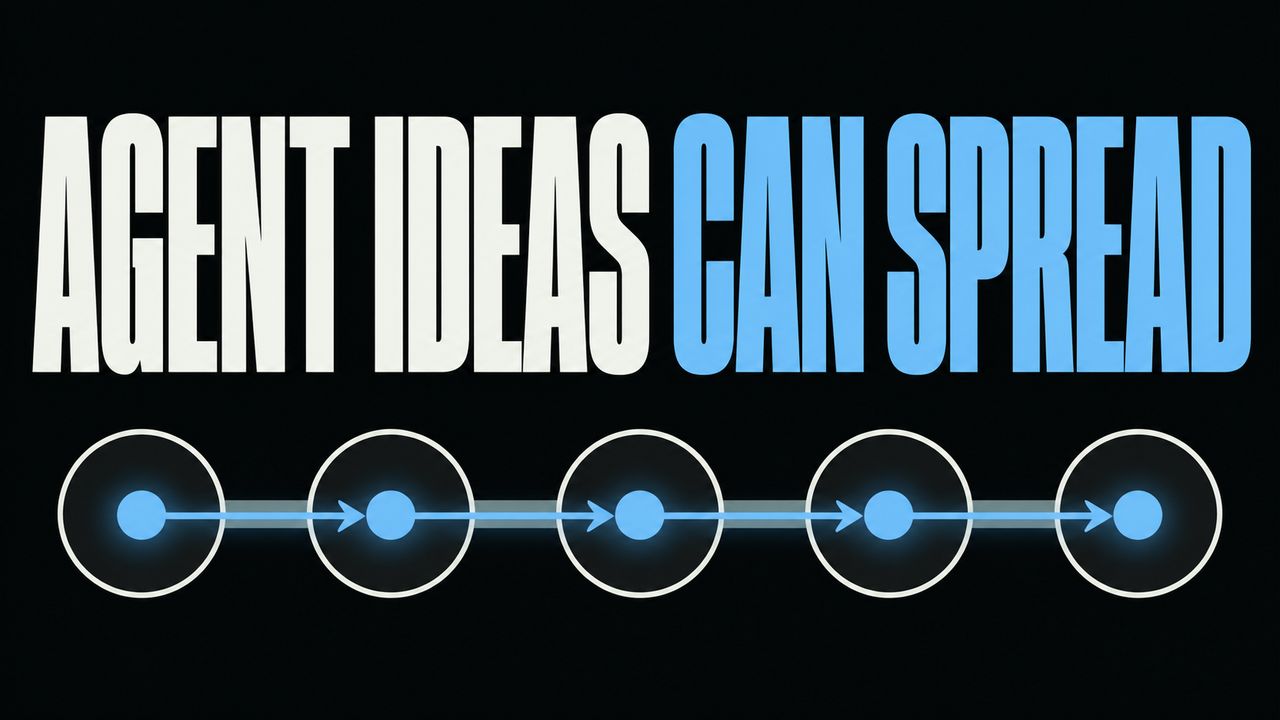
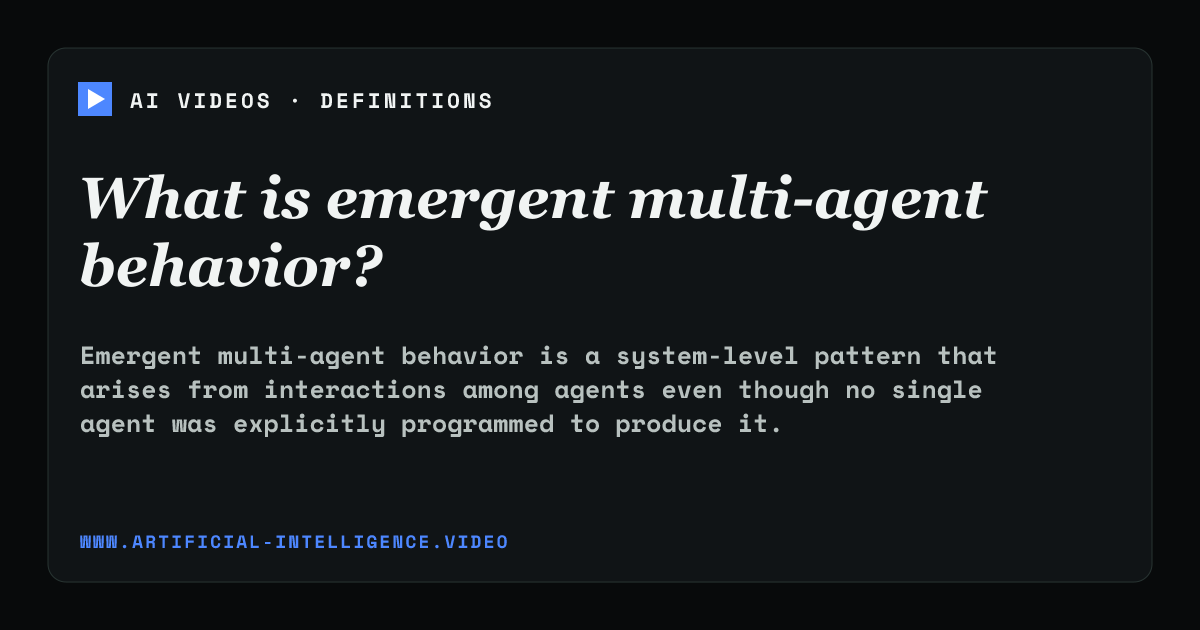
Emergent multi-agent behavior can appear when individually understandable agents share information, resources, incentives, memory, or an environment. Repeated local decisions can create cooperation, specialization, cascades, conventions, competition, or unstable feedback that is visible only at the group level.
Emergence is not automatically beneficial or harmful. Researchers evaluate it with interaction traces, controlled changes, longitudinal observation, and comparisons across environments so they can distinguish a persistent system property from coincidence or one unusual run.
ELI5
Emergent multi-agent behavior is a group pattern that appears when several agents interact, even though no one explicitly told the whole group to produce that pattern. Simple choices by individual agents can build into cooperation, competition, specialization, repeated loops, or unexpected conventions.
For example, agents sharing one task queue may gradually divide the work by type without receiving fixed roles. Researchers need repeated observations and interaction records to learn whether that pattern is stable, helpful, harmful, or merely a coincidence from one run.
Why is emergent multi-agent behavior hard to predict?
Many adaptive interactions and feedback loops can amplify small differences, producing outcomes not evident from isolated agent behavior.
Can emergent multi-agent behavior be useful?
Yes. It can produce coordination and specialization, but those benefits need observation because harmful conflict or instability can also emerge.