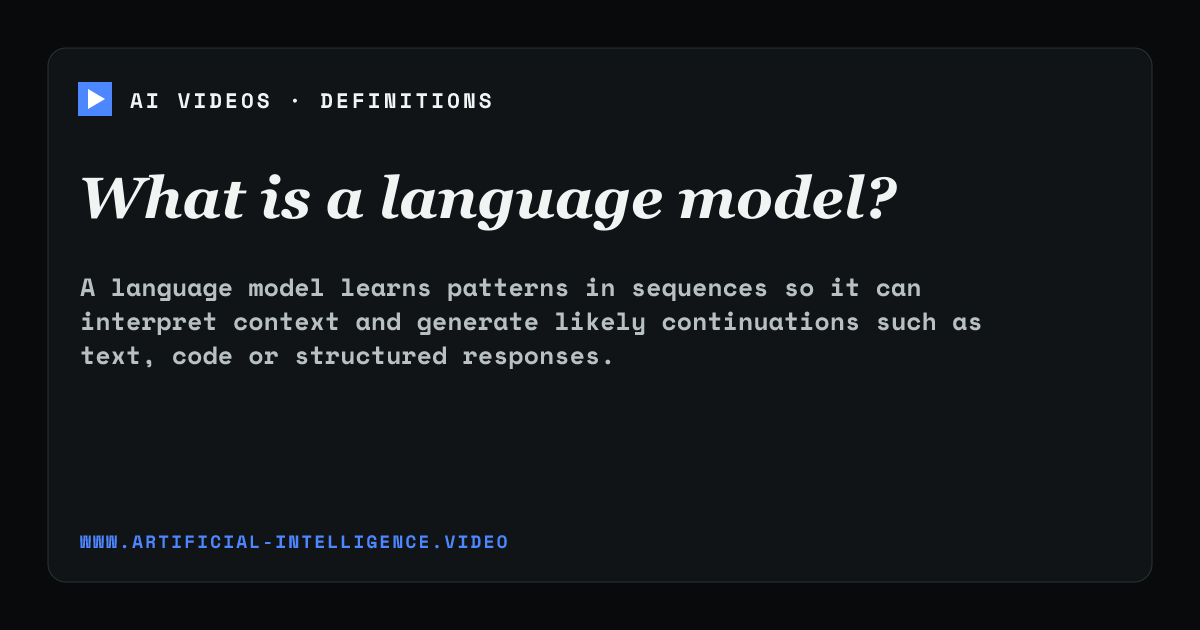
A language model learns statistical relationships among units in a sequence, usually tokens derived from text or another encoded medium. Given a context, it estimates useful continuations and can generate, classify, summarize or answer questions from those learned patterns.
Modern language models can be connected to encoders that turn images, audio or other signals into representations the model can attend to. This lets a shared decoder reason over more than written words while still using its sequence-processing abilities.
A language model does not automatically know whether its output is true or appropriate. Reliable applications add evidence, evaluation, constraints and human review according to the consequences of a mistake.
ELI5
A language model is an AI system trained to recognize patterns in text and other tokenized information. It uses those patterns to work out what kind of response is likely to fit the instructions and context it receives.
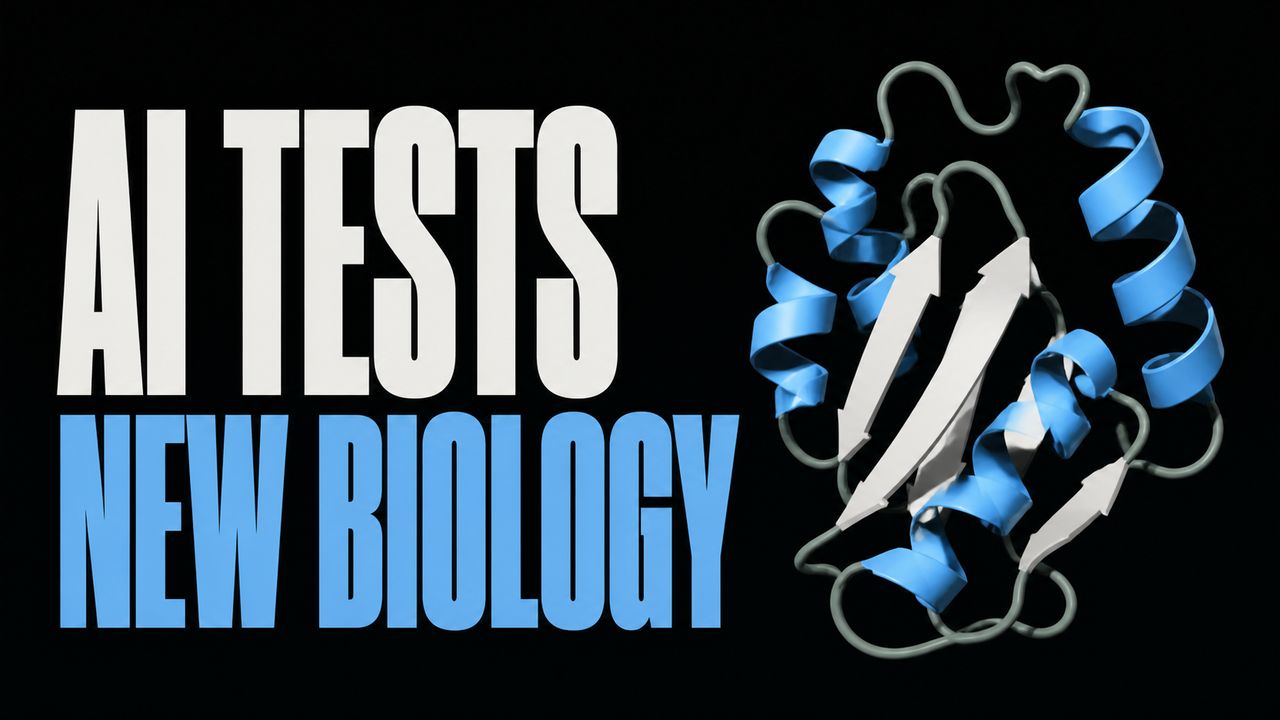
For example, a language model can write a plan and ask a specialist protein tool to evaluate a candidate. The useful result may come from the model, the tool, the supplied data, and later laboratory testing together, so the model should not receive credit for every part.
Is a language model only for written text?
No. A language model can receive encoded representations of audio, images and other data when an application connects suitable input components.
Why can a language model make mistakes?
It generates from learned patterns and context, which does not guarantee that every statement is factual, complete or suitable for a particular situation.