Robotic precision manipulation combines detailed perception, calibrated motion and feedback control. Tasks such as arranging tools or closing a container require accurate grasping and adjustment as the object or mechanism responds.
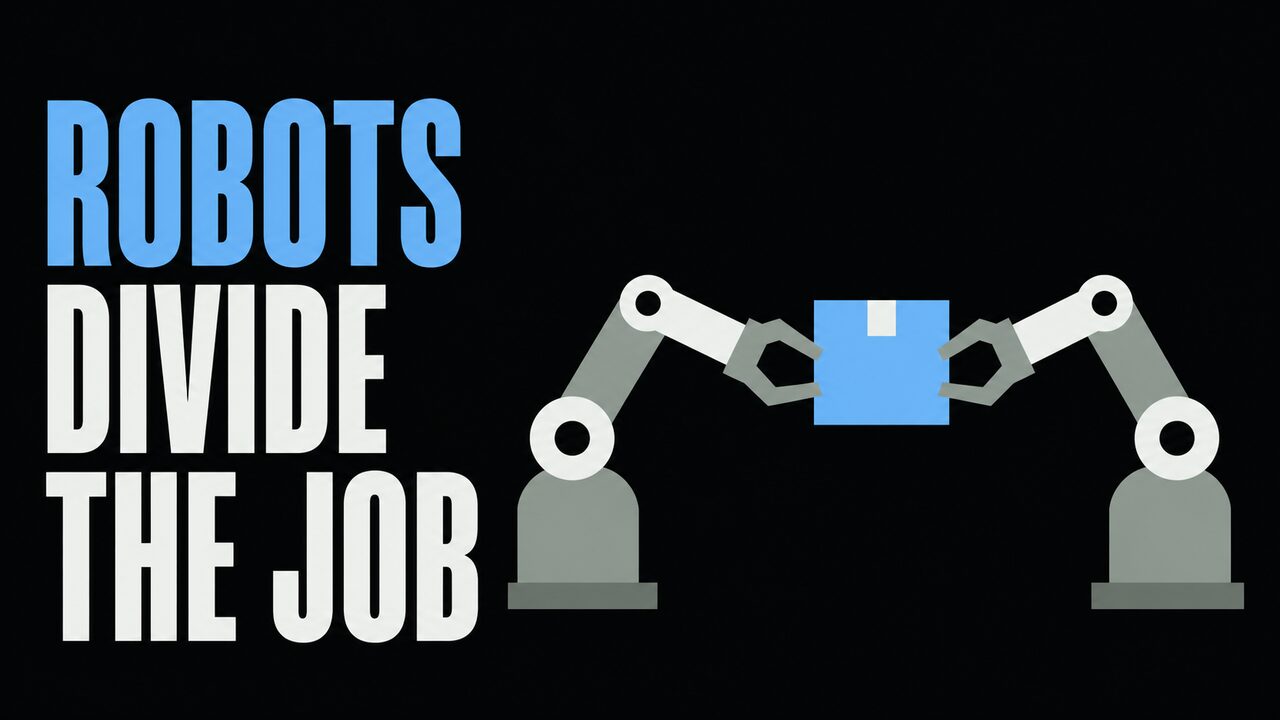
A specialized smaller robot may perform this work better than a machine optimized for broad movement. Multi-robot systems can exploit that difference by handing the precise stage to the most suitable platform.
ELI5
Robotic precision manipulation moves or handles an object when position, alignment, or force must stay within a small tolerance. It needs detailed sensing, calibrated motion, and rapid corrections as the object responds.
For example, a small robot may align a tool exactly or close a delicate container without crushing it. In a robot team, that precise stage can be handed to the machine designed for fine control.
What makes robotic manipulation precise?
Accurate sensing, calibration, fine motor control, force feedback and closed-loop correction keep position and interaction within required tolerances.
Why assign precision manipulation to a specialized robot?
A specialized arm may provide better reach, repeatability, grippers or control resolution than a larger robot designed mainly for mobility.