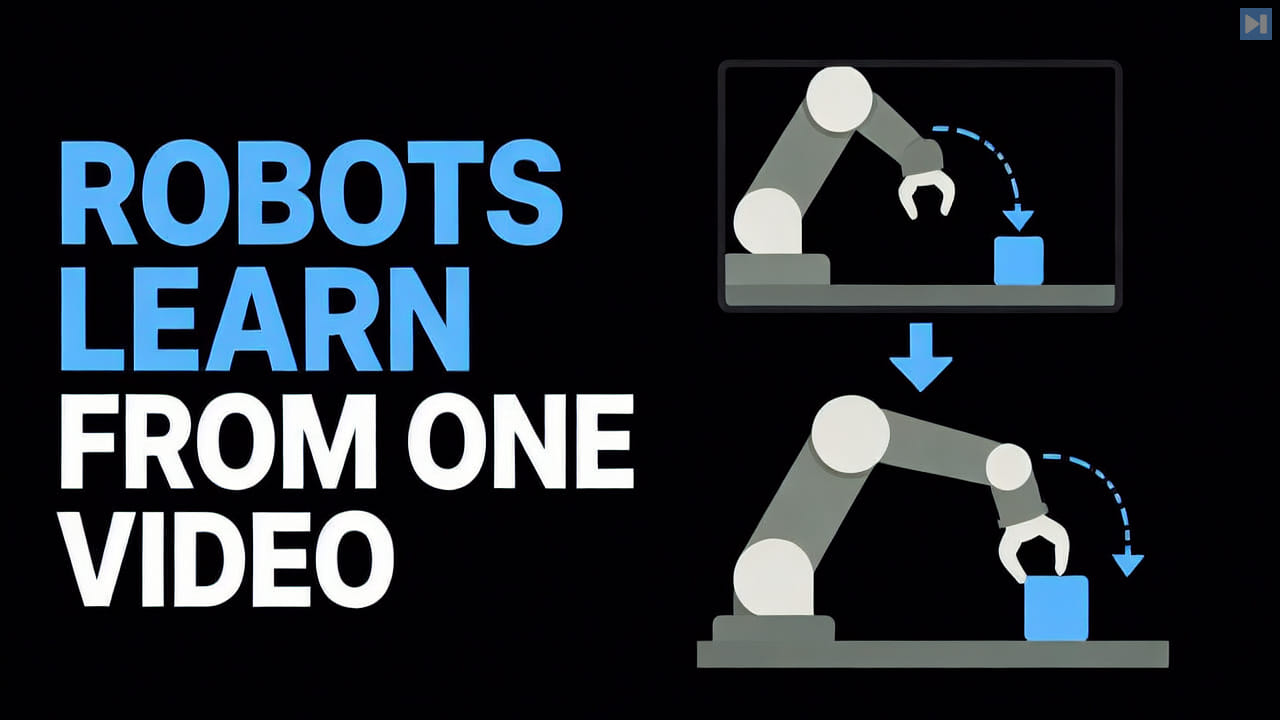
A robotics foundation model learns reusable representations and behaviors from varied robot, visual, language, or action data. Applications can adapt that broad capability to particular tasks through prompting, demonstrations, fine-tuning, or additional control layers.
General capability does not guarantee safe performance on a new machine or environment. Physical deployment requires task evaluation, motion constraints, failure recovery, and evidence that the model handles unfamiliar objects and conditions reliably.
ELI5
A robotics foundation model is trained broadly so it can support many physical tasks, robot types, or environments. It learns reusable patterns from combinations of robot actions, images, language, and other data instead of being designed for only one fixed movement.
For example, the same base model might be adapted to sort objects in a warehouse and help a different robot follow spoken instructions. Each deployment still needs testing and safety limits because a new body or environment can behave differently.
How is a robotics foundation model adapted to a task?
It can use instructions, demonstrations, in-context examples, fine-tuning, or a task-specific controller depending on its architecture.
Can one robotics foundation model control every robot?
No. Differences in sensors, movement, tools, safety limits, and environments still require compatible interfaces and validation.