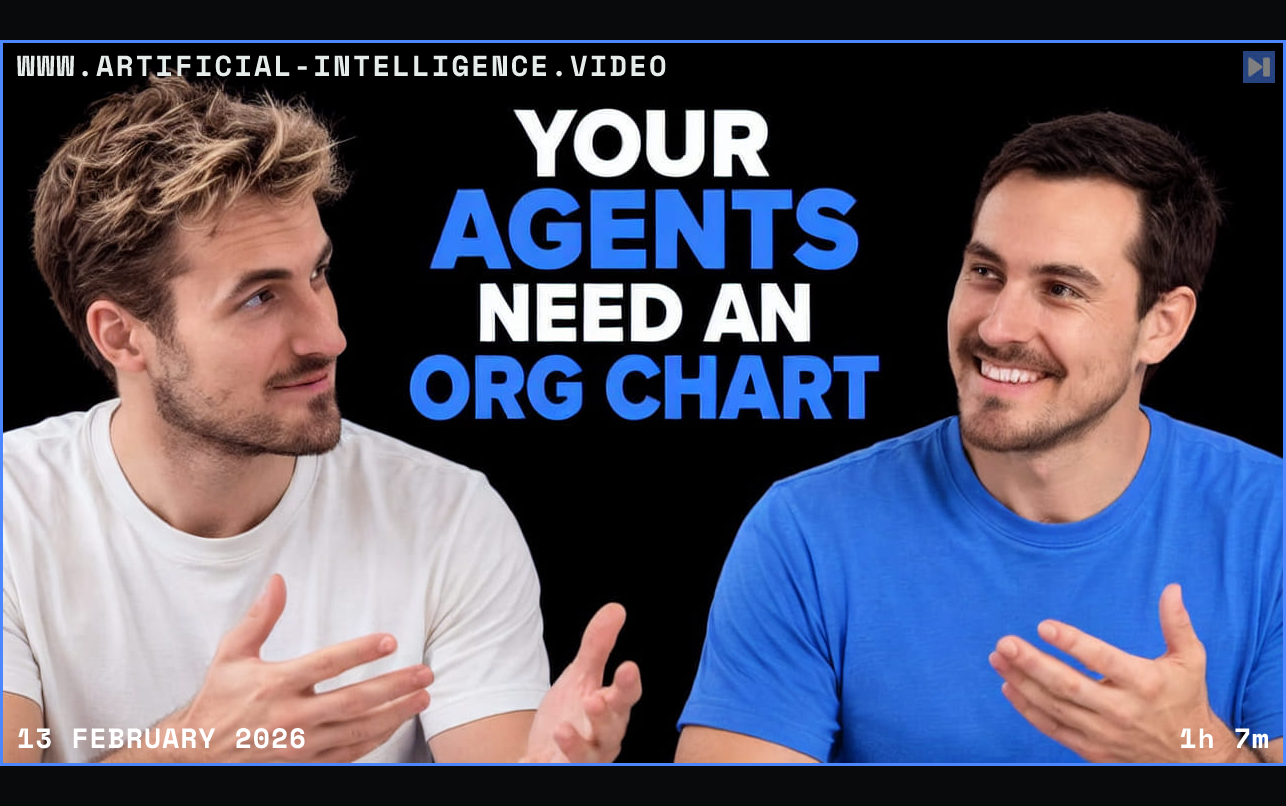
Richard Diehl Martinez proposes three generations of AI-assisted development: chat interfaces, individual coding agents and coordinated agent teams. Pierce Freeman questions whether the latest shift is mainly about parallelism or also about specialization and the way developers structure work.
They distinguish short-lived delegated tasks from long-running teammates with separate contexts and peer communication. The discussion treats roles, task ownership, tools and message routes as design choices that can shape coordination, rather than assuming more agents automatically produce better work.
The hosts explore organizational charts and computing abstractions as metaphors for these systems. They ask whether users will design team structures themselves or rely on an orchestrator to propose them, and how consistent evidence of correct work could support calibrated trust.
A lengthy disagreement focuses on safety-critical software. They contrast safeguards in the model with review of its generated output, using aviation and medical devices as analogies. Both retain the importance of domain expertise and checks; their liability discussion is exploratory, not legal guidance.
The closing sections examine adaptive reasoning effort, compounding errors and the need for useful observability. Compiler and browser demonstrations serve as capability examples, but the hosts differ on whether they establish qualitatively new problem-solving ability. They caution that code volume and runnable output do not alone establish correctness or maintainability.
 Watch on YouTube