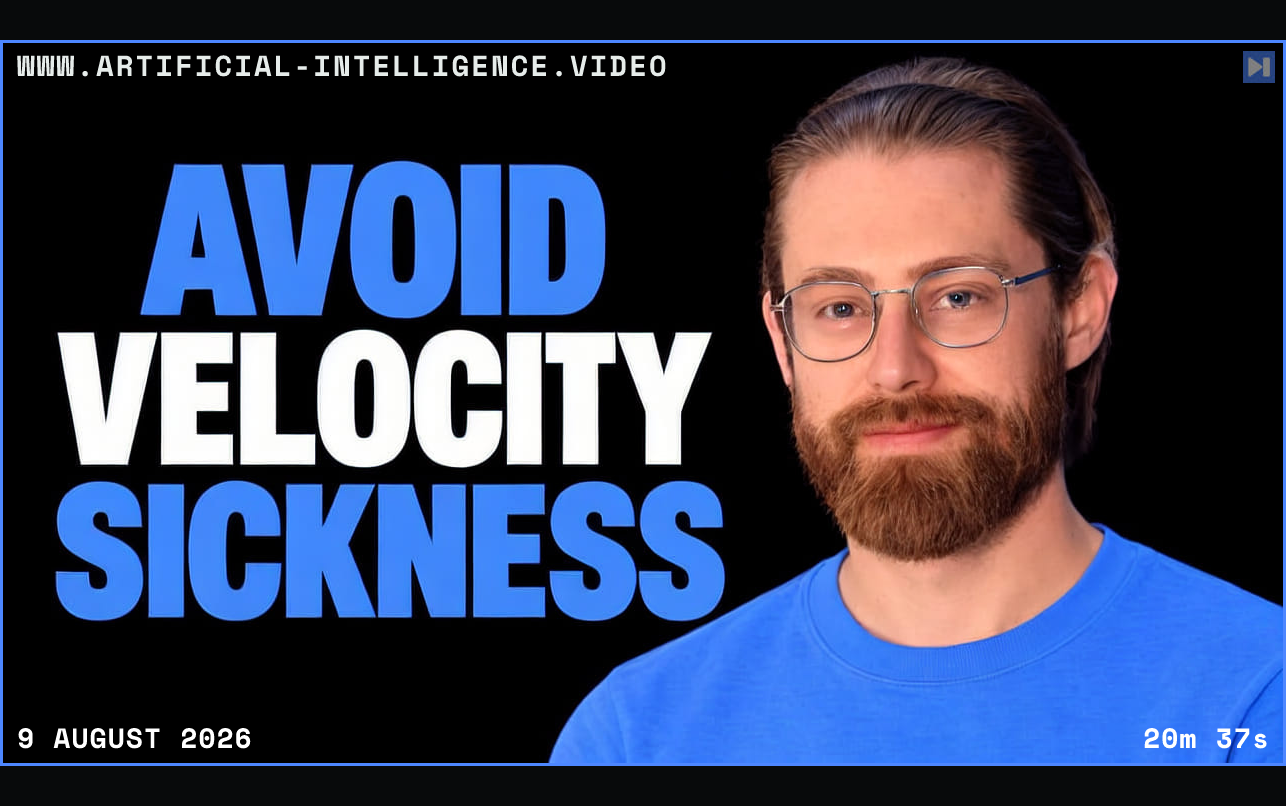
The speaker identifies four problems that intensify when an entire software team adopts coding agents: too many pull requests, work moving in conflicting directions, repeated restarts that waste effort and critical design decisions being ceded to agents. He groups these failures under velocity sickness, meaning stress and low impact caused by a sudden increase in output.
The speaker argues that AI has shifted engineering away from continuous hands-on implementation. People now contribute most during planning and final polish, while agents increasingly handle implementation, so teams need tools designed for collaborative technical decisions rather than isolated chat sessions.
The speaker proposes using durable shared documents as the system's decision layer. Documents hold explicit context and agreed choices, while replaceable agents act from that state, helping teams review plans early, preserve ownership, coordinate parallel work and avoid losing reasoning inside ephemeral sessions.
The speaker recommends shifting attention from code velocity to idea velocity. Teams should explore and compare more possibilities before implementation, align on important decisions earlier, keep humans accountable for those decisions and share plans with knowledgeable colleagues before asking agents to build.
 Watch on YouTube