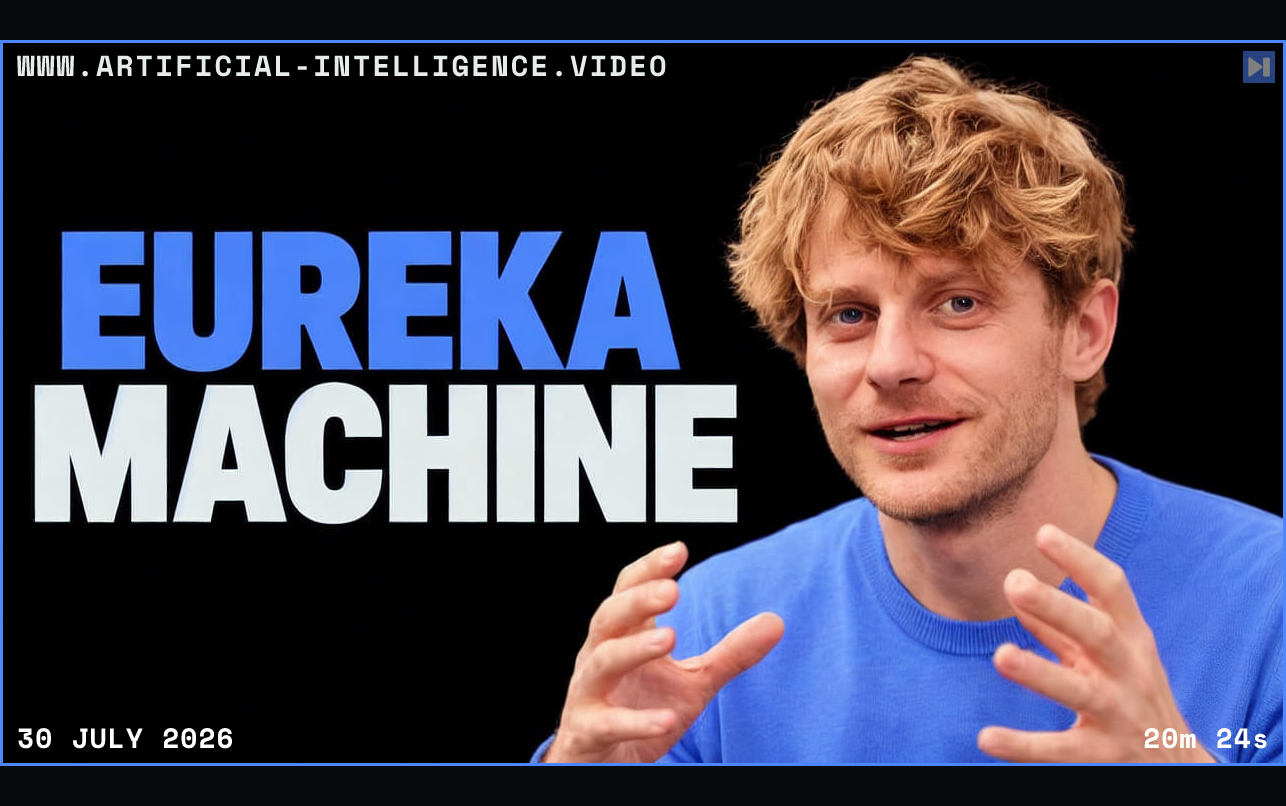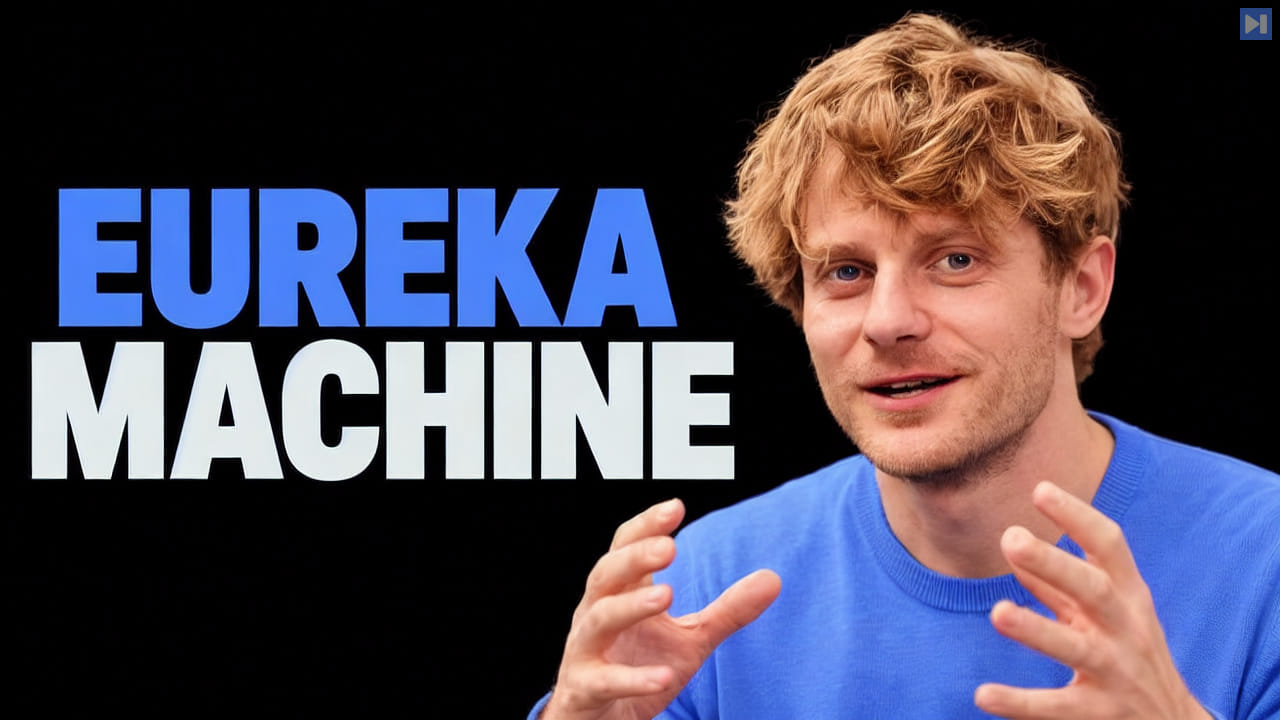
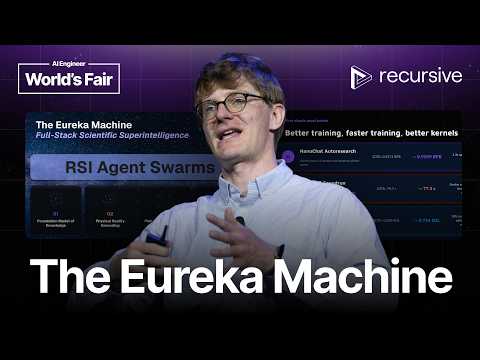
Richard Socher proposes a long-term Eureka machine for automating scientific discovery. He uses biological and technological evolution as an analogy for open-ended progress, then argues that a growing body of specialized scientific knowledge creates a bottleneck for human researchers. These broad claims about future growth and human flourishing are his thesis, not established outcomes of the current system.
His proposed design combines existing scientific knowledge, measurement data, simulation and real-world laboratory experiments, coordinated by AI agents. He connects that architecture to advances in machine learning that replaced hand-designed features with learned systems, and suggests that better coding agents could increasingly help improve AI research processes.
The concrete examples are narrower than the full vision: Socher reports improvements in a small NanoChat training measure, a NanoGPT speedrun and CUDA kernels. He says the team checked the kernel work with Nvidia for reward exploits. He explicitly says these automated research runs are not yet full recursive self-improvement, which would require a system to recognize its own shortcomings and update its complete next-generation training and tool stack.
 Watch on YouTube