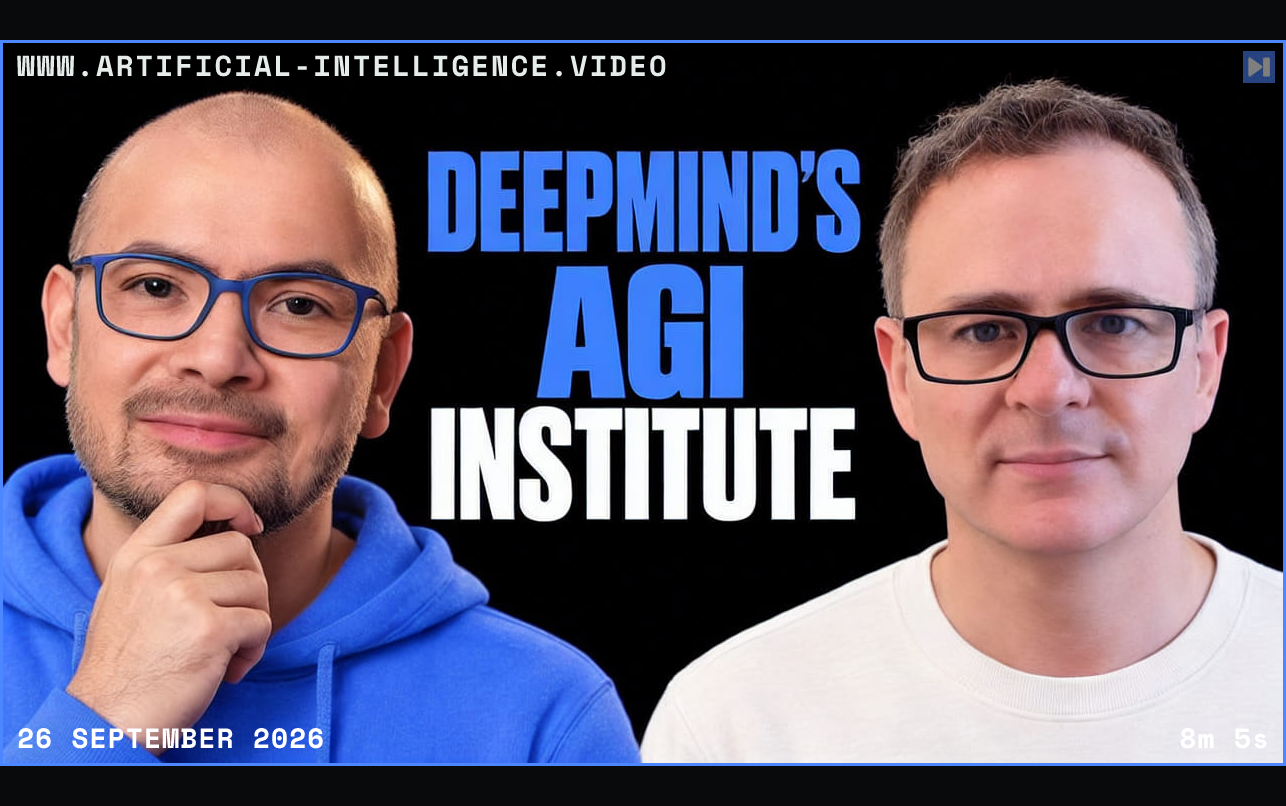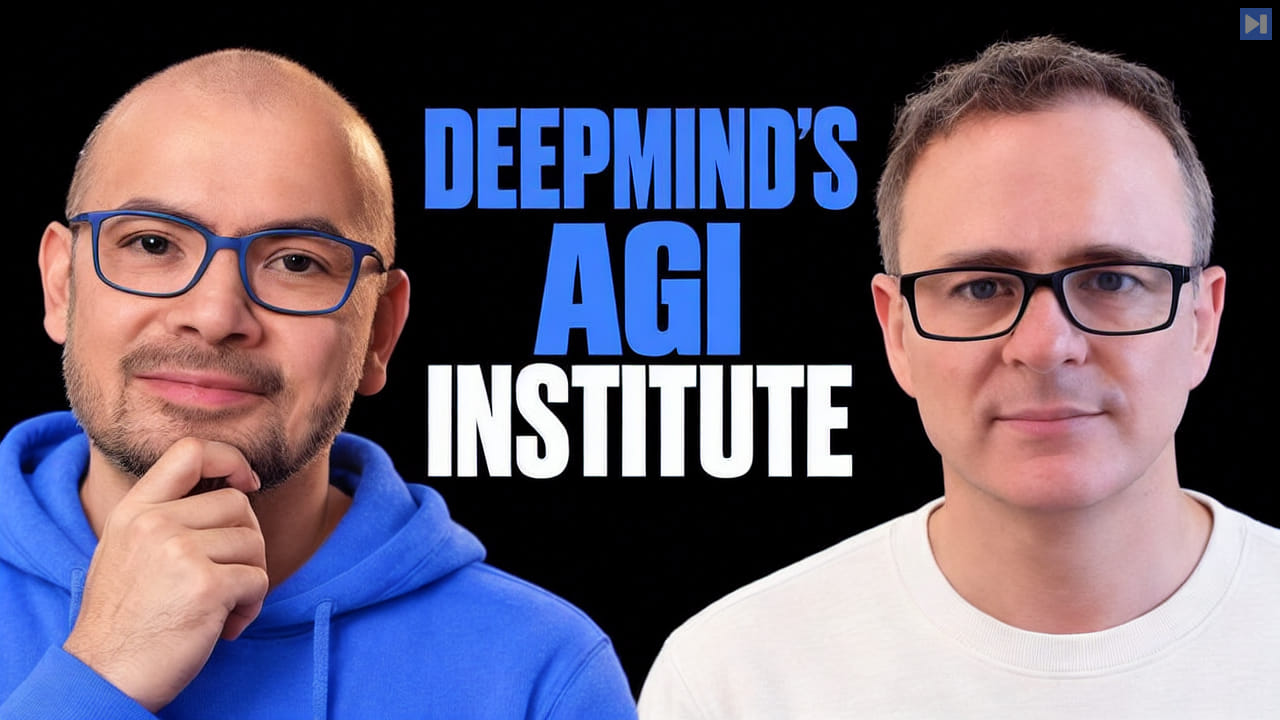
TheAIGRID examines the DeepMind Institute as an organization intended to study how AGI should be built, measured, governed and usedArtificial general intelligence is the proposed form of AI that could learn and perform a broad range of intellectual tasks with flexible, general capability.. The narrator interprets its launch and research program as evidence that the lab is preparing for a possible transition to human-level systems, while distinguishing this institutional move from a new Gemini release or proof that AGI already exists.
Shane Legg's reported forecast gives a 50 percent chance of minimal AGI by 2028, while rejecting the claim that current systems have already crossed that threshold. TheAIGRID connects this prediction with a cognitive framework that assesses ten abilities using fresh tasks rather than relying on a single coding or mathematics score. Demis Hassabis's cited concerns include unreliable creativity, consistency, memory, continual learningContinual learning lets an AI system acquire new knowledge or skills over time while retaining what it learned earlier. and the ability to generate valuable scientific questions.
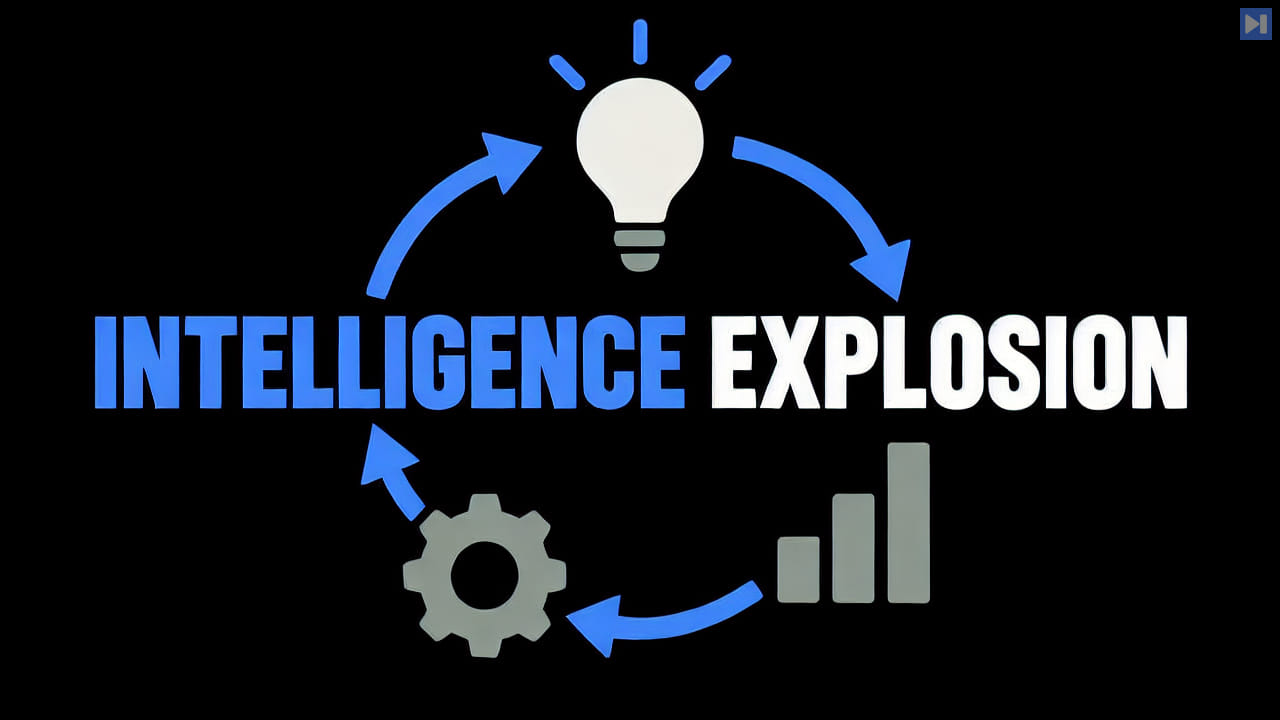
TheAIGRID explains recursive improvement as a research feedback loopRecursive self-improvement is the proposed process in which an AI system helps improve its own capabilities, then uses those improvements to support further advances. in which agents help design, code, test and train better systems, rather than an instant transformation into superintelligence. The video also discusses reasoning monitorability: readable chain-of-thought traces may expose unsafe plansChain-of-thought monitoring analyzes a reasoning model's exposed intermediate reasoning for signs of errors, policy violations, deception, or unsafe plans., but future systems could reason in representations humans cannot inspect. It describes proposals to measure monitorability, test evasion, preserve visible reasoning and audit rewards that might teach models to conceal suspicious behavior.
Demis Hassabis's cited standards-body proposal would begin with voluntary independent testing of powerful modelsIndependent AI evaluation tests an AI system through reviewers who are meaningfully separate from the team that built it. up to 30 days before release, with possible later deployment requirements and coordinated slowdowns if serious risks emerge. The video explicitly treats this as a proposal, not adopted Google policy or law. It also reviews economic research that compares several disruption scenarios and favors responses triggered by observable indicators such as wages, unemployment duration and labor's income share, rather than assuming mass unemployment is already occurring.
TheAIGRID highlights a tension between a company developing frontier systems and an institute helping define the benchmarks and safeguards used to judge them. The institute's essays are described as conversation starters rather than official Google positions, and the institute is not presented as an independent regulator with authority over model releases. The narrator recommends watching for published cognitive profiles, preserved reasoning monitorability, independent agent evaluations and actual company commitments before judging whether the launch changes development decisions.
 Watch on YouTube