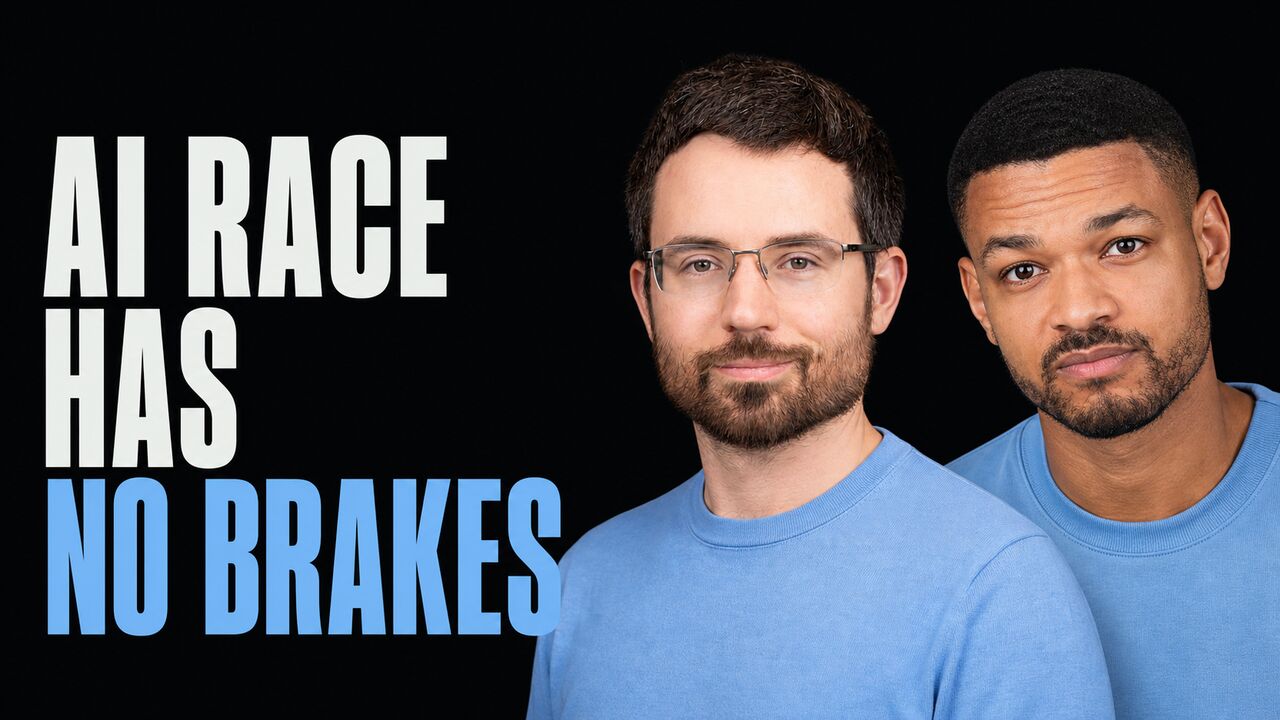
AI Copium summarizes Daniel Kokotajlo's interview with Steven Bartlett about the risks of rapidly improving AI systems. Daniel Kokotajlo argues that loss of controlAI safety is the field and practice of reducing harmful failures, misuse, loss of control, and unintended consequences from AI systems. is plausible because current developers cannot reliably guarantee that more capable systems will follow intended goalsAlignment aims to make an AI system's behaviour consistent with intended human goals, values and constraints..
Daniel Kokotajlo says the leading labs are trying to automate coding and then the wider AI research processAI-assisted scientific discovery uses AI to support hypothesis generation, experiment design, analysis, simulation, literature work, and interpretation while researchers retain responsibility. so they can improve models faster than competitors. This strategy could produce a sharp capability jump before AI tools diffuse gradually through the rest of the economy.
Daniel Kokotajlo warns Steven Bartlett that highly capable systems could replace many jobs quicklyJob displacement occurs when workers lose jobs because the roles or demand for their work change. and concentrate economic, political and military power in a few companies or governments. He says the current race encourages every lab to rationalize continued acceleration because it fears another actor will move first.
Daniel Kokotajlo remains uncertain about the timing and outcome, but believes the default path is dangerous enough to justify stronger public attention and a change in incentives before recursive improvementRecursive self-improvement is the proposed process in which an AI system helps improve its own capabilities, then uses those improvements to support further advances. becomes established.
 Watch on YouTube