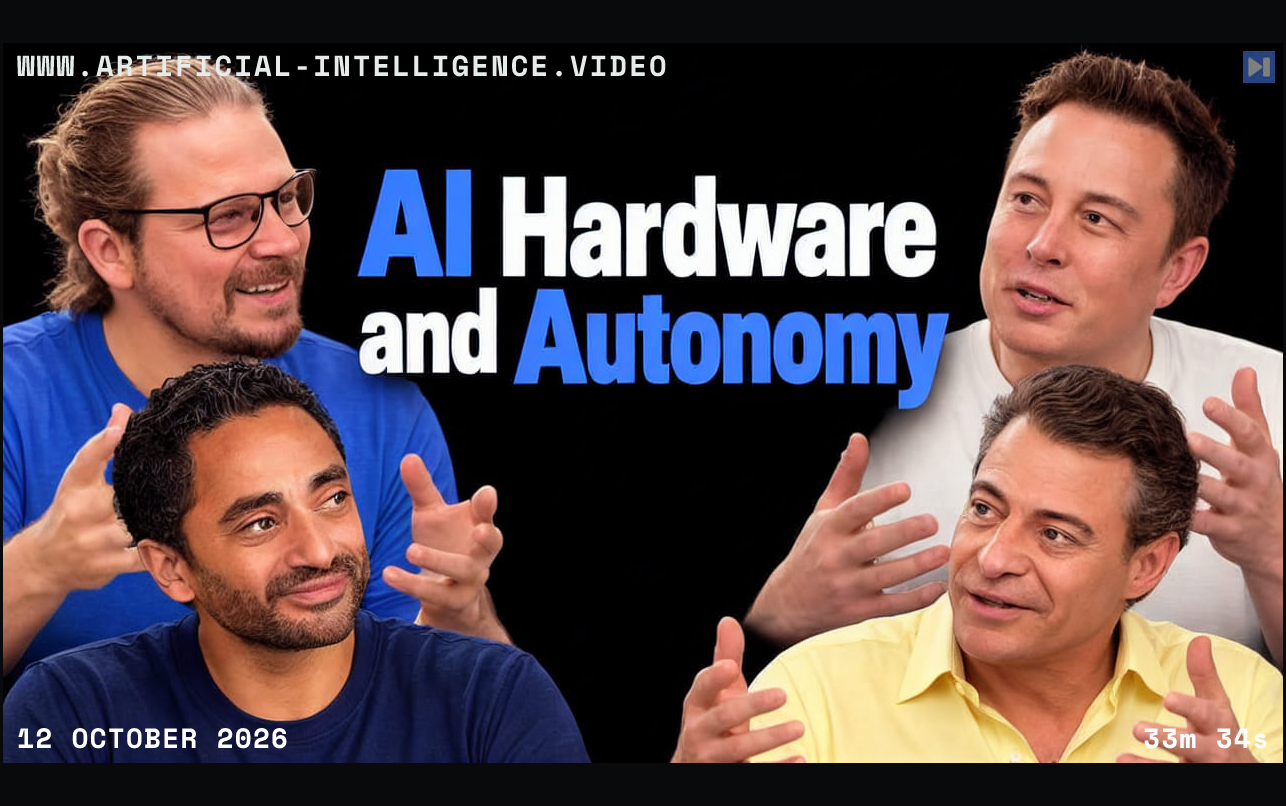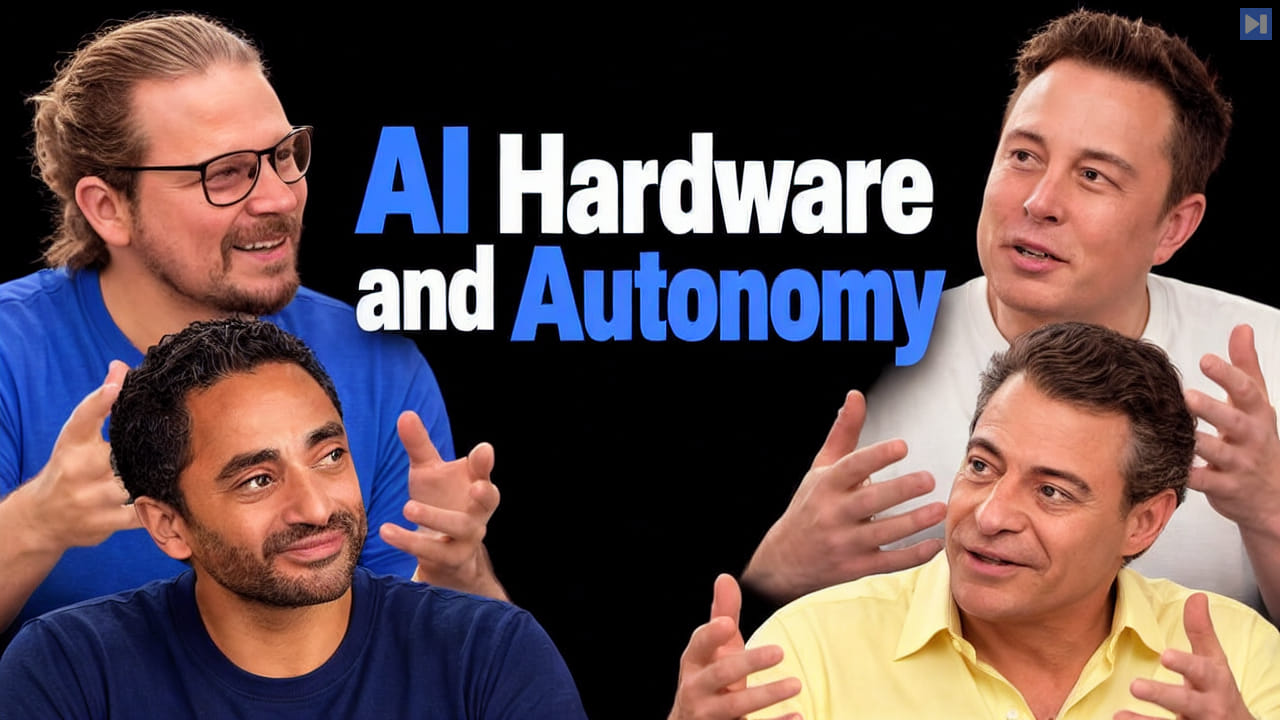
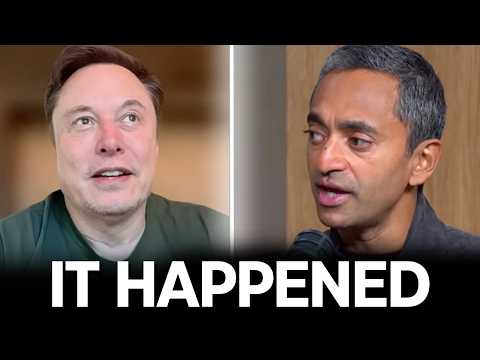
David Carbutt connects Elon Musk's ambitions in chips and robotics with Chamath Palihapitiya's claim that AI is reducing the scarcity of software code. David Carbutt contrasts easily copied code with physical manufacturing, memory supply and the engineering required to make useful robots.
Elon Musk describes a faster chip-design iteration loop and the many unresolved problems in robot hands, generalization and supply chains. Peter H. Diamandis, Emad Mostaque and Alexander Wissner-Gross discuss possible robotics scale and new markets; those forecasts remain speculative rather than verified production outcomes.
David Carbutt contrasts Elon Musk's concern about how advanced AI is treated during training with Chamath Palihapitiya's emphasis on near-term practical benefits. David Sacks criticizes moral autonomy in model training, while Dave Blundin's agent-operations example illustrates why debates about model welfareModel welfare concerns whether AI systems could have morally relevant experiences and how that possibility should affect their treatment. matter for business practices.
David Carbutt closes with the tension between model capability, predictable behavior and measurable usefulness. The cited speakers disagree about AI consciousness and alignmentAlignment aims to make an AI system's behaviour consistent with intended human goals, values and constraints.; their analogies and probabilities are opinions, not evidence that present models are conscious or that any particular production forecast will occur.
 Watch on YouTube