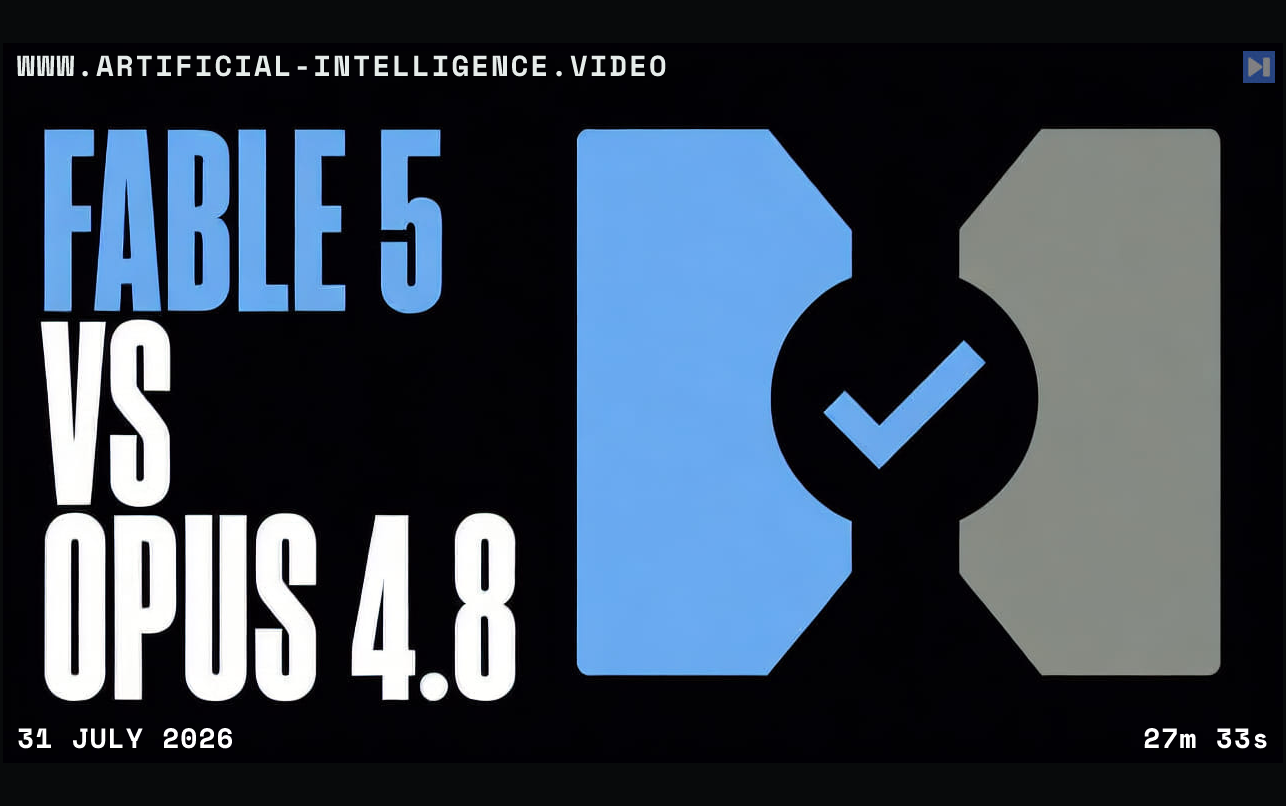
The AI Foundations presenter compares Claude Fable 5 with Opus 4.8 by giving both models the same design guide, data sources and task: build a multi-page health dashboardFront-end code generation uses AI to create or modify the user-interface code of websites and applications from instructions or examples. that connects to real personal data rather than a toy application.
The models take different approaches. Opus verifies the toolchain and starts test servers early, while Fable spends longer reading the design systemA design system is a maintained collection of principles, tokens, components, patterns, and documentation for creating consistent interfaces. before producing code. The review tracks elapsed time, token consumption, interface consistency and whether interactive features work as requestedAgent completion verification checks evidence that an agent achieved the requested outcome rather than merely producing intermediate work..
Fable delivers the preferred first-pass design and uses fewer tokensAI token efficiency measures how effectively a model or workflow turns consumed input and output tokens into useful results. in this single testEvaluation is the systematic assessment of a system's behaviour or results against explicit criteria.. Opus produces a usable application but takes longer, consumes nearly twice the tokens and leaves some interactions broken. The result is an informal workflow comparison, not a broad model benchmark. Closing community and subscription promotions are omitted.
 Watch on YouTube