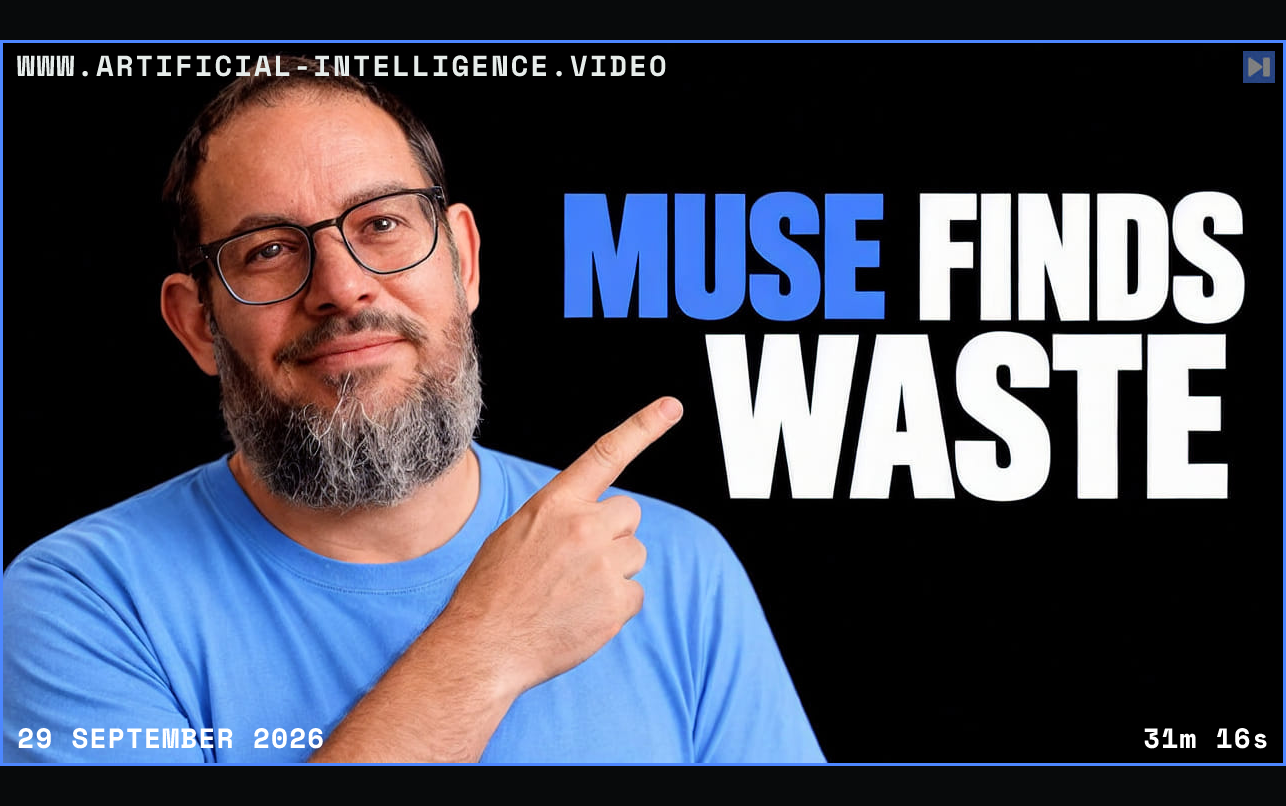
Nate B Jones reports that Meta's Muse identified $5,350 in annual subscription spending and had canceled $1,285 of it at the time of his test. Identified spending is not the same as realized savings, and these are his personal results rather than a general promise. He also discusses other reported uses, including refund requests, phone-plan comparisons and family scheduling.
The analysis focuses on approachable agent design: a continuous conversation, an avatar, clear progress states and contextual account connectionsA personal AI agent uses a person's authorized goals, preferences, routines, context, and tools to provide continuing individualized assistance.. Nate B Jones argues that remembering a person's circumstancesAI agent memory is stored information that an agent can retrieve and use across steps, sessions, or changing contexts. can matter as much as a frontier model's raw capability. He acknowledges uncertainty about phone-call automation, human involvement and disclosure, and treats privacy and account accessData privacy governs how personal, confidential, or sensitive information is collected, used, shared, retained, and protected in AI systems. as choices users must evaluate.
The broader argument concerns who owns the starting point of a purchase. Nate B Jones interprets Amazon's objections, other retailers' partnerships and transaction-based business models as competition over customer relationships, distinguishing that interpretation from companies' stated concerns. His optimism is conditional on repeated useful execution and completed purchasesAgentic commerce uses AI agents to assist with stages of buying and selling, such as product discovery, comparison and checkout., not partnership announcements alone.
 Watch on YouTube