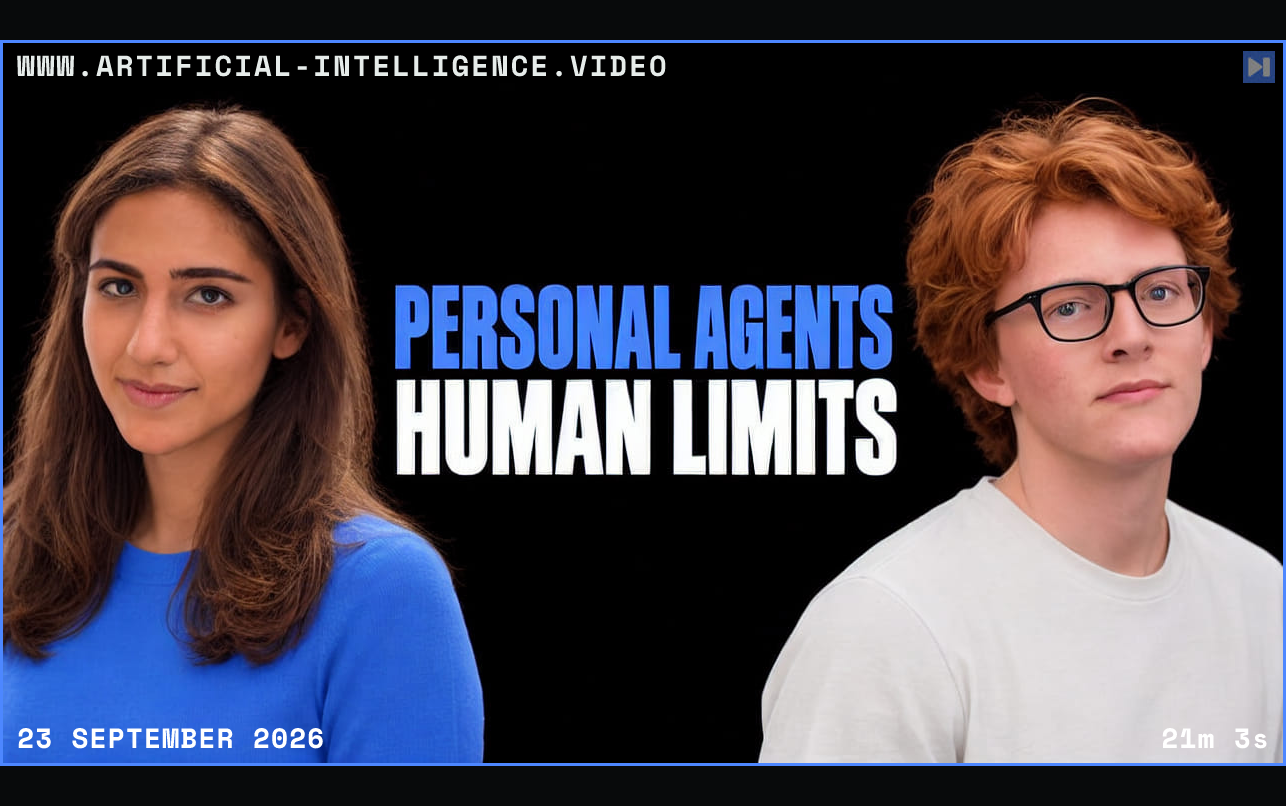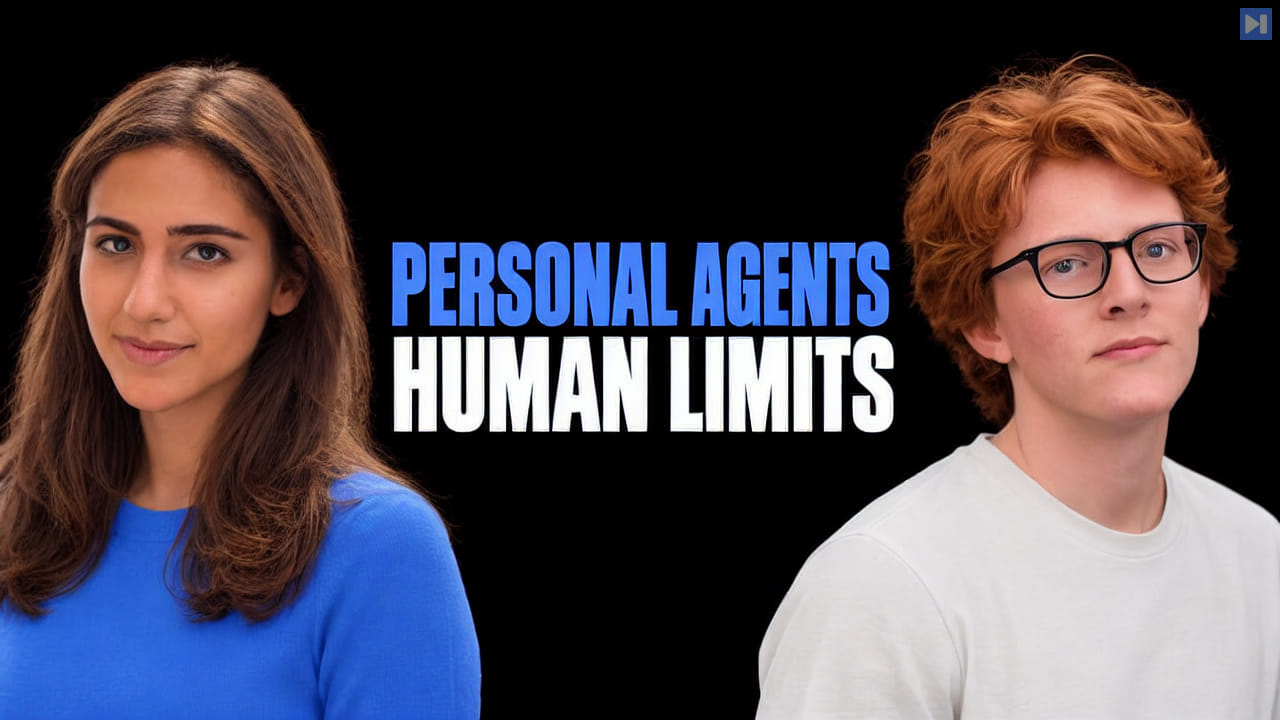
OpenAI researcher Houda Nait El Barj joins Theo Jaffee to discuss personal agentsA personal AI agent uses a person's authorized goals, preferences, routines, context, and tools to provide continuing individualized assistance. that remember goalsAI agent memory is stored information that an agent can retrieve and use across steps, sessions, or changing contexts. and help over longer periods. She distinguishes saving time from enabling projects people would not otherwise attempt, while arguing that users need visible scopeAn agent permission boundary limits the information, tools and actions an AI agent can use during a task., explanations and the ability to steer an agent.
Their conversation examines where delegation can undermine meaning or relationships. An agent mediating a group must handle conflicting preferences and private informationData privacy governs how personal, confidential, or sensitive information is collected, used, shared, retained, and protected in AI systems. rather than simply favoring its owner. Nait El Barj treats interpersonal choices differently from routine logistics and emphasizes that technical capability alone does not settle what should be automated.
The final section imagines lower-cost exploration of scientific hypothesesAI-assisted scientific discovery uses AI to support hypothesis generation, experiment design, analysis, simulation, literature work, and interpretation while researchers retain responsibility., including neglected rare-disease research. These are prospective possibilities, not demonstrated clinical outcomes. Persistent context and simpler interfaces could help people pursue such work, but trust, boundaries and usability remain unresolved.
 Watch on YouTube