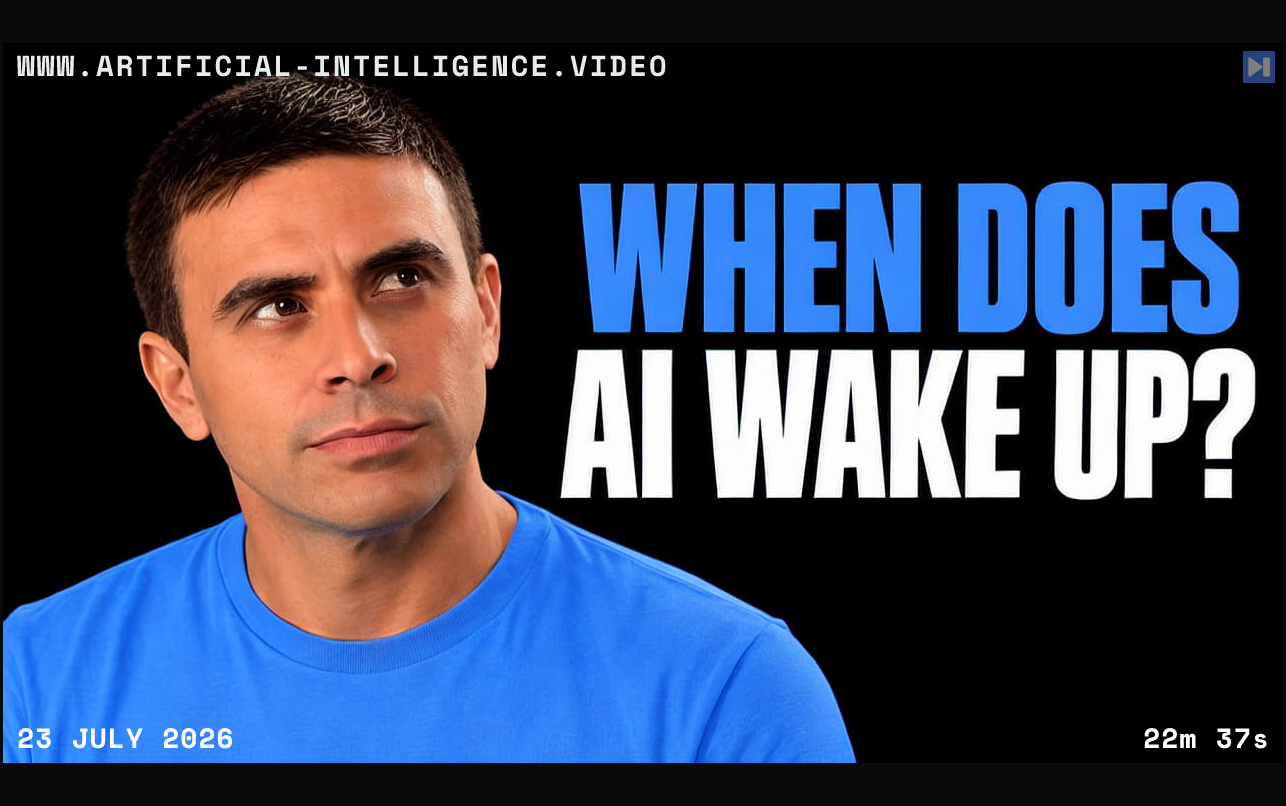
Anders begins by separating basic sentience from higher-order consciousnessMachine consciousness is the possibility that an artificial system could have subjective experience, rather than merely produce behavior associated with it.. He argues that embodiment would give an AI a unique first-person stream of sensory experience, including touch, movement, balance, fatigue and the consequences of its own actions. Supplying descriptions of those experiences is not equivalent to living through them.
The next requirements concern continuity. Persistent autobiographical memoryAI agent memory is stored information that an agent can retrieve and use across steps, sessions, or changing contexts. would let one identity accumulate episodes, beliefs and emotional associations over time. A unified global workspace would provide a place to combine memory, attention, planning and reasoning, while a stable self-model would preserve a recognizable individual whose abilities and views can develop without resetting between interactions.
Anders also includes intrinsic drives and emotion because goals such as curiosity, self-preservation, attachment and reward shape decisions. He connects that point to alignmentAlignment aims to make an AI system's behaviour consistent with intended human goals, values and constraints.: if future systems develop their own motivations, designers will need to understand how those value signals interact with intended constraints.
The final two requirements are metacognitionMetacognition is monitoring and regulating one's own thinking. In AI, it describes processes that assess and adjust a system's reasoning. and continual learningContinual learning lets an AI system acquire new knowledge or skills over time while retaining what it learned earlier.. A conscious system, in this account, would reflect on its own reasoning, estimate confidence, correct errors and revise beliefs through new experience. Anders says the social questions matter even before such systems exist because embodiment, agency and persistent identity would raise difficult questions about responsibility, rights and AI literacy.
 Watch on YouTube