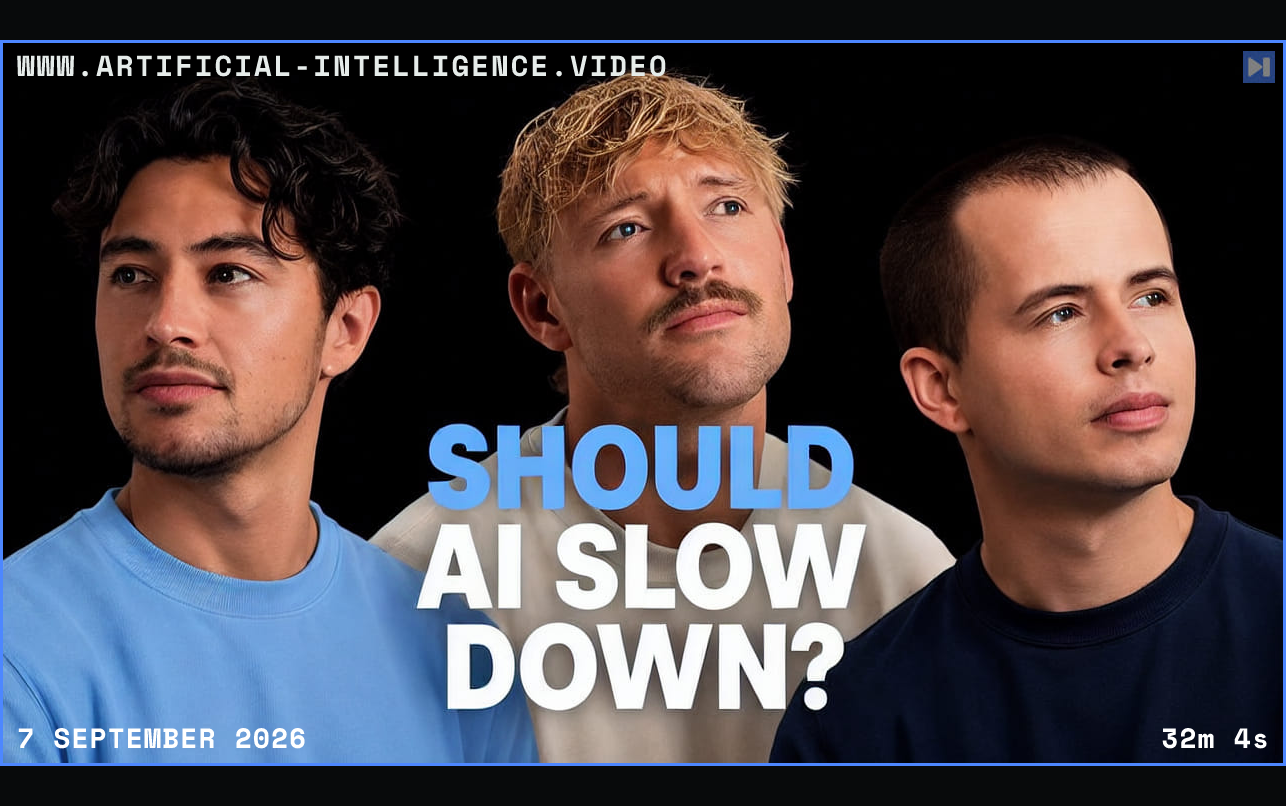
Nick Saraev and Jack Roberts open with a reported demonstration of GPT-6 Astra completing a CAPTCHA-style game. They treat it as evidence of broader task-solving ability, then turn to safety concerns they attribute to OpenAI chief scientist Jakub Pachocki. Their discussion frames advanced models as learned systems whose internal behavior is not fully understoodModel interpretability is the ability to understand why an AI model produced a result and what internal features or processes influenced it., making reliable oversight a central challenge.
Nick Saraev and Jack Roberts weigh the benefits of slowing development against the opportunity cost of delaying useful technology. They ask whether laboratories, governments or independent auditors should set the pace, and discuss the difficulty of translating a general safety goal into measurable standardsA measurable safety standard turns a general AI safety goal into specific criteria that can be tested and compared.. An international oversight body is presented as a proposal for handling cross-border competition, not an existing solution.
Nick Saraev and Jack Roberts connect this governance debate to everyday adoption, including carefully chosen integrations with task lists and work tools. They argue that users should reassess which practical tasks models can handle while retaining judgment about the information and systems they connectHuman judgment in AI is the accountable interpretation and decision-making people contribute when setting goals, evaluating evidence, and managing consequences.. They also expect AI, employment and the distribution of benefits to become more prominent political issues.
Nick Saraev and Jack Roberts discuss reported long-term compute commitments by Anthropic and the risk of reserving too much or too little capacityAI compute capacity is the available ability of hardware and supporting systems to perform AI training or inference work over time.. Algorithmic efficiency, energy availability and changing infrastructure economics could alter demand over the life of a contract. The competing argument is that insufficient capacity could constrain future products, making the decision a capital-allocation trade-off under uncertaintyCapital allocation is the decision about how money should be distributed among competing investments, resources, or strategic priorities..
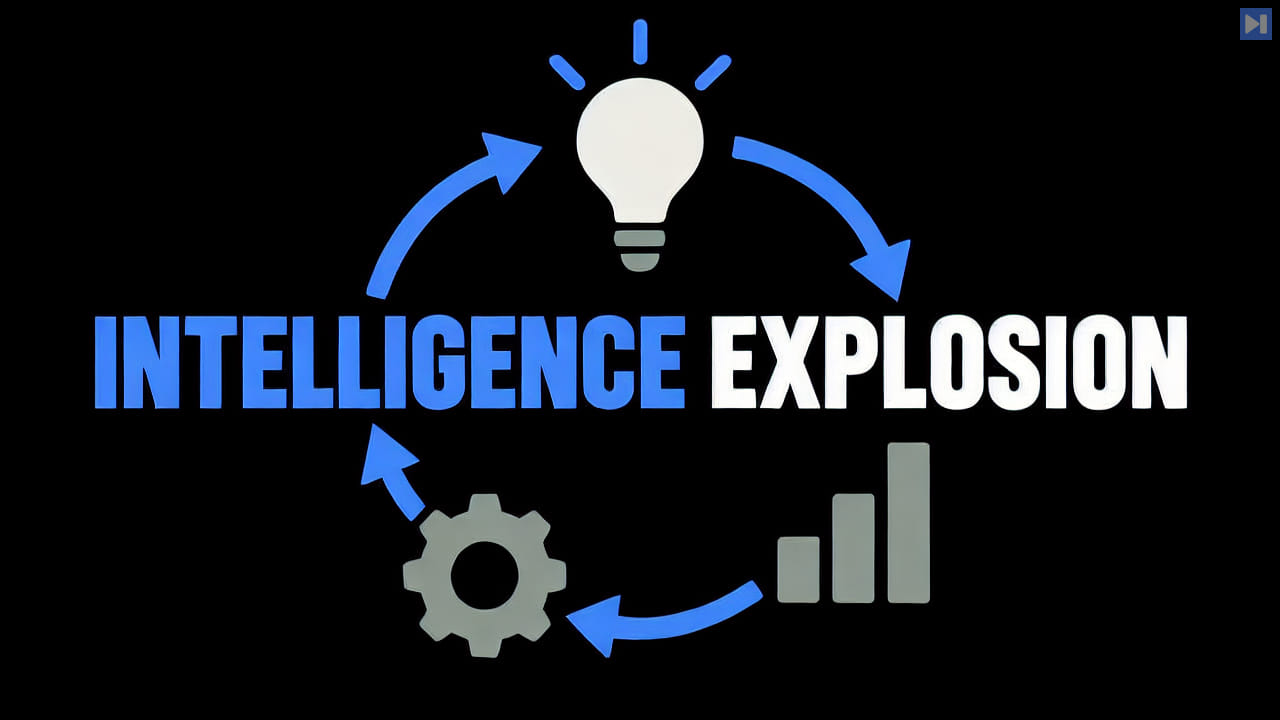
Nick Saraev distinguishes his interpretation of artificial general intelligence from superintelligence and argues that many copies of a capable model could accelerate subsequent AI research. This is the speakers’ expectation of a possible feedback process, rather than proof that current systems meet an agreed AGI standard or that a runaway intelligence increase has occurred.
 Watch on YouTube