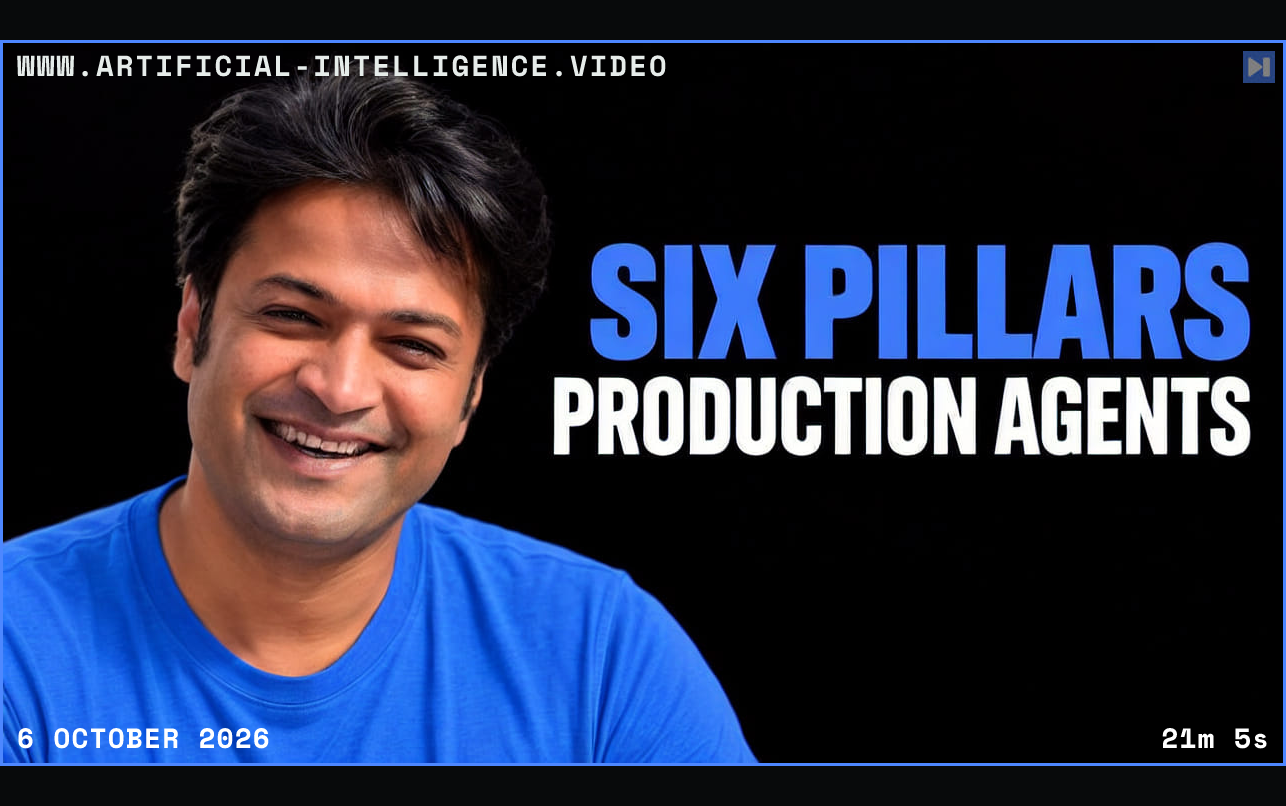
Varun Krovvidi contrasts generating code with operating production systems, where engineers must investigate across telemetry, infrastructure, knowledge and code. He explains why a compelling model demo does not establish reliable incident diagnosis: anchoring, poorly scoped context and coherent but non-causal answers can send an investigation in the wrong direction.
Varun Krovvidi describes six architectural pillars: task-sensitive model orchestration, precise context engineering, causal chains of evidence, governed actions, learning from investigations and user feedback, and systematic evaluation. He emphasizes least-privilege access, calibrated confidence and testing changes to models, use cases and architecture rather than assuming better reasoning solves every operational problem.
Varun Krovvidi demonstrates a multi-agent investigation that correlates observability data with code and deployment changes, identifies stale integrations and rules out a coincident cloud outage. The example illustrates evidence-backed hypotheses and shared investigation context, but remains a presenter-led demonstration rather than independent proof of production performance.
 Watch on YouTube