An orchestration layer can route work according to capability, cost, privacy, latency and available infrastructure. It may combine a cloud model for planning and verification with a local model for repetitive execution.
Reliable orchestration needs clear routing rules and evidence about model performance on each task type. The supervising model should not accept another model's output blindly, especially when an error could reach an external system.
ELI5
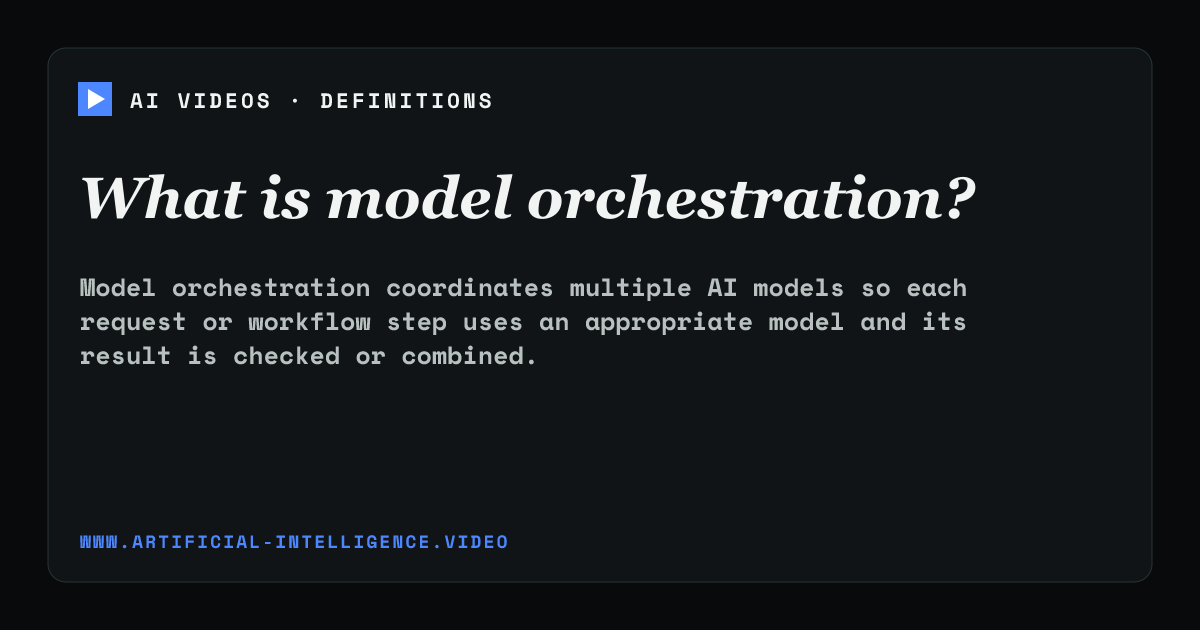
Model orchestration coordinates several AI models inside one product or workflow. It decides which model should handle each part, passes the needed information between steps, and combines the results into one usable experience.
For example, a project might use one model to research sources, another to write code, and an image model to create artwork. The orchestration layer must track which model did what and verify that using several models actually improves the final result.
What factors can guide AI model orchestration?
Capability, quality, cost, latency, privacy, availability and hardware limits can guide routing.
Why should one AI model check another model's output?
Verification can catch errors before a lower-cost or specialized model's result affects the larger workflow.