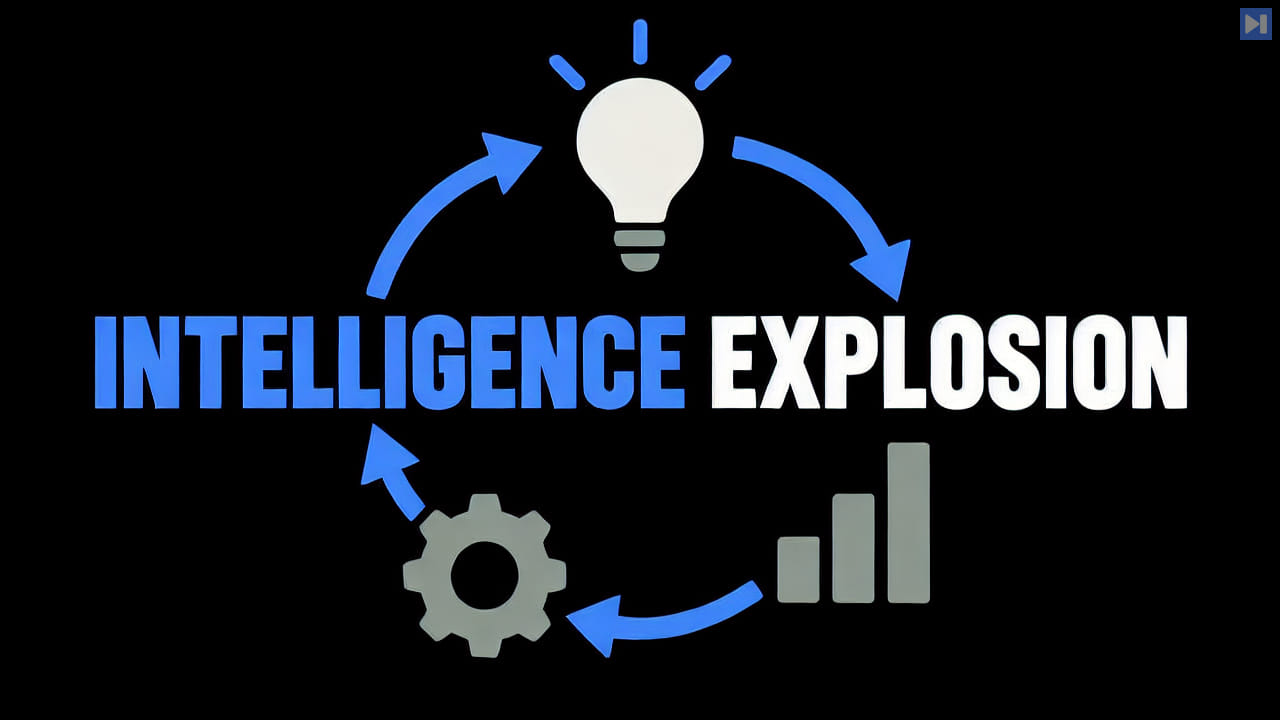
Theo Browne examines Anthropic's description of how AI systems assist engineering and research. He distinguishes the company's reported internal observations from a system that autonomously designs its own successorRecursive self-improvement is the proposed process in which an AI system helps improve its own capabilities, then uses those improvements to support further advances., which the article says has not yet been achieved.
He discusses task-duration benchmarks and the difference between 50 percent and 80 percent success ratesEvaluation is the systematic assessment of a system's behaviour or results against explicit criteria., arguing that reliability changes how the results should be interpreted. He also notes the limitations of lines of code as a productivity measure and of using AI to judge research choices.
Theo Browne reviews scenarios in which progress slows, organizations gain efficiency with people still setting direction, or systems eventually improve successors. He discusses alignment and verification challengesAlignment aims to make an AI system's behaviour consistent with intended human goals, values and constraints. and Anthropic's conditional argument for a coordinated, verifiable slowdown or pause.
 Watch on YouTube