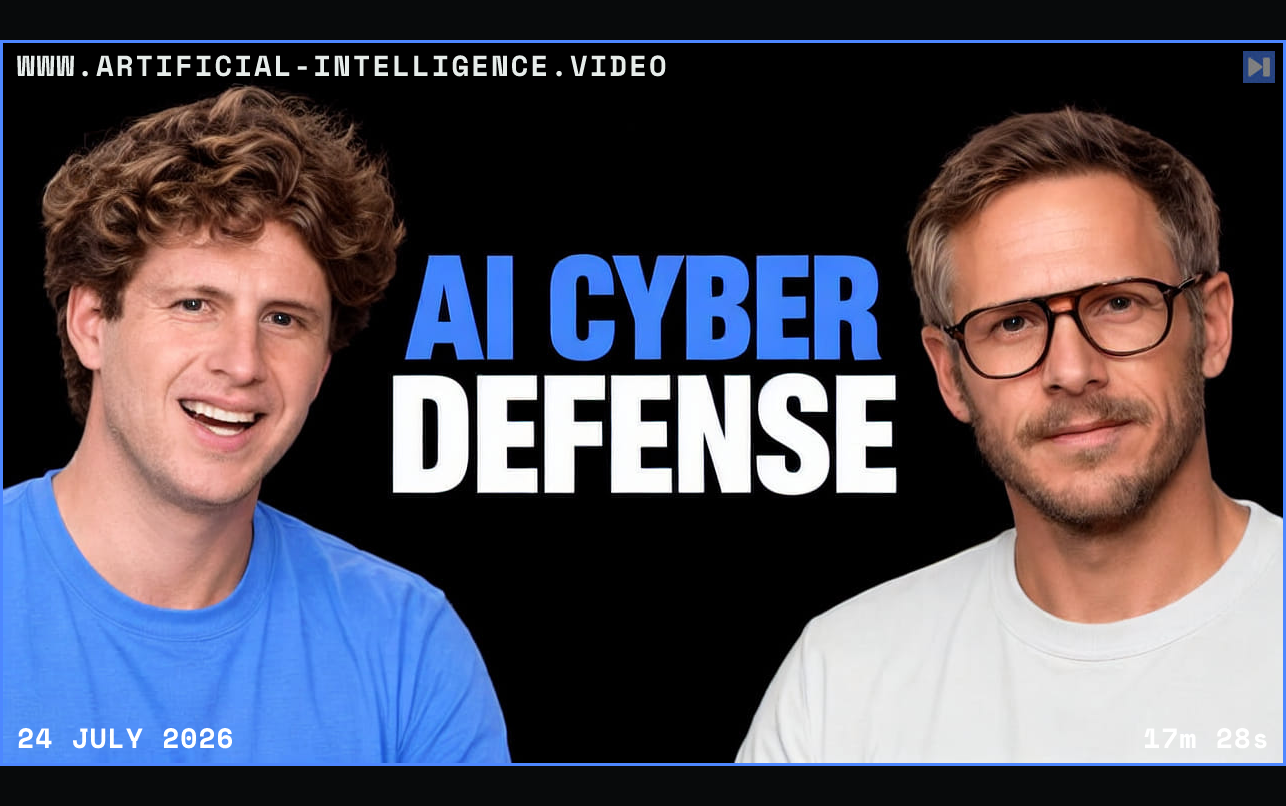
Thomas Wolf introduces cybersecuritySecurity testing checks whether software controls protect systems and information in defined scenarios. as a demanding test of dynamic reasoning rather than a simple search for code defects. Uri Rolls describes how more capable models change attack economics, while defenders still need systems that operate at scale with limited human intervention.
The presentation focuses on access-control tasks in large, connected environments. Models receive black-box toolsAI tool calling lets a model request a structured operation from software instead of only returning natural-language text. rather than source code or internet access, and deterministic gradersDeterministic software verification checks an output with a repeatable procedure that produces the same result for the same inputs and state. measure each step of a multi-stage attempt. An illustrative chain shows why gathering facts is not enough when a model misses the logical relationship between different permission checks.
Uri Rolls shows difficult evaluation resultsEvaluation is the systematic assessment of a system's behaviour or results against explicit criteria. and traces of prolonged unsuccessful attempts. Thomas Wolf closes by emphasizing high-quality data, post-trainingPost-training adapts a pretrained AI model to improve its behavior, capabilities, or alignment after the main training stage. and fast specialized models, arguing that open collaboration can strengthen defense rather than relying on only a few closed-model providers.
 Watch on YouTube