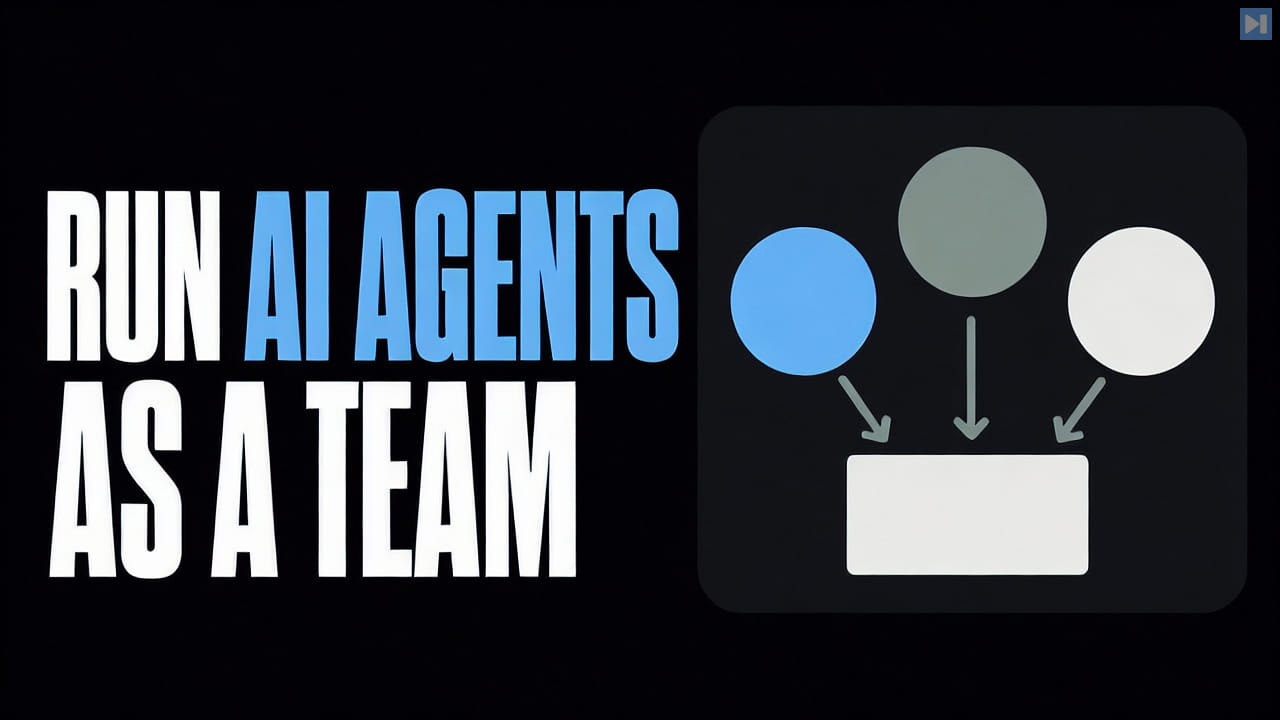
Parallel AI agent execution lets several agents explore alternatives, compile code, run tests, evaluate results, or specialize in different tasks at the same time. It can reduce elapsed time when work is independent and sufficient compute, tools, and isolated state are available.
Parallelism creates supervision and coordination costs. Systems need task ownership, resource limits, collision prevention, deduplication, result comparison, and clear stopping rules so a person is not forced to monitor many low-level processes continuously.
ELI5
Parallel AI agent execution means letting several agent tasks run at the same time instead of making each one wait for the previous task to finish. It can save time when the pieces of work are independent and have separate tools or files.
For example, one agent could inspect tests while another reviews documentation and a third investigates a bug. The results still need clear ownership and coordination so agents do not edit the same thing, repeat work, or leave a person sorting through many conflicting answers.
When does parallel AI agent execution help?
It helps when tasks or candidate solutions can run independently and be verified or combined through a controlled integration step.
Why can monitoring many parallel agents be difficult?
Each agent creates status, decisions, errors, and results, increasing the cognitive load required to detect conflicts and choose what matters.