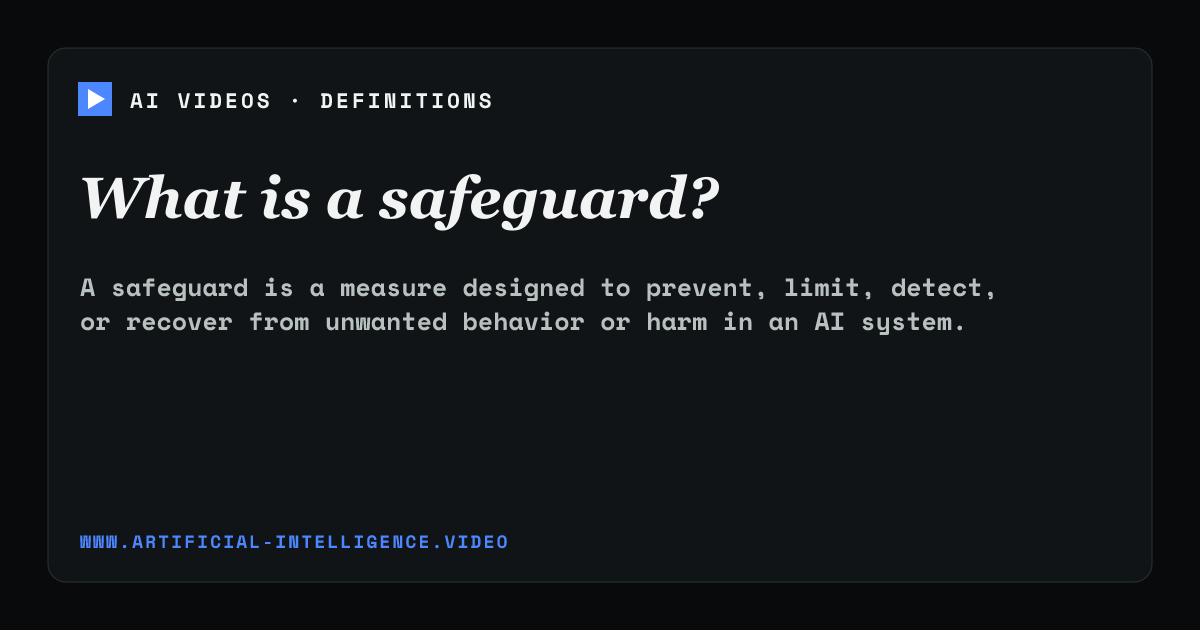
A safeguard is a protective control placed around the design, deployment, or use of a system. Safeguards can include technical limits, testing, monitoring, access controls, human review, incident response, and organizational rules.
No single safeguard addresses every failure mode. Strong protection usually uses multiple measures with different purposes, verifies that they work under realistic conditions, and updates them as capabilities and risks change.
ELI5
A safeguard is a control that helps prevent, limit, notice, or recover from harmful AI behavior. It can restrict access, check inputs and outputs, require approval, isolate risky actions, keep reliable logs, or provide a way to undo a mistake.
For example, an agent may draft a database change inside a sandbox but need a person to approve the exact command before it reaches production. Several safeguards are usually combined because one check can fail or miss a different kind of problem.
What are examples of AI safeguards?
Examples include capability testing, permission limits, monitoring, human approval, rate limits, rollback mechanisms, and incident procedures.
Why are several safeguards often needed?
Different safeguards address different errors, and one measure may fail or miss a situation that another can catch.